Breeds / Giant
Scottish Deerhound puppies
Gentle, dignified and quietly affectionate at home, the Scottish Deerhound is a Highland coursing hound with enormous stamina in the field and almost no guarding instinct.
The facts
- Size class Giant
- Country of origin Great Britain
- Adult weight 34 to 49.9 kg
- Adult weight in pounds 75 to 110 lb
- Adult height 71 to 81 cm
- Energy level Moderate
- Grooming Low
- Coat type Medium wiry and double
- Shedding Moderate
- Typical lifespan 8 to 11 years
- Good with children Fine with supervision
- Good with other dogs Reliably good
About the Scottish Deerhound
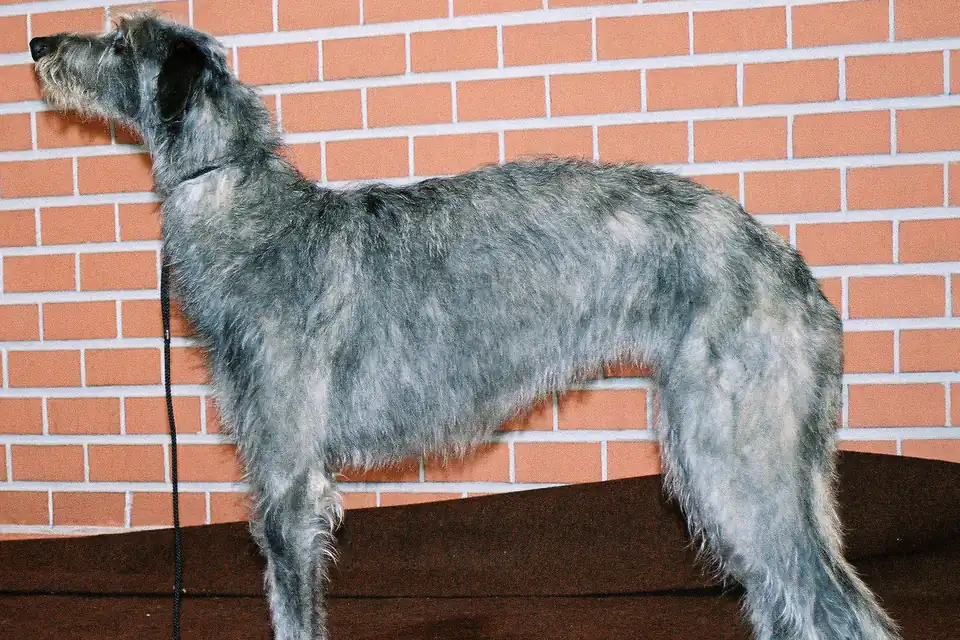
The Scottish Deerhound was bred in the Highlands to course red deer over rough, broken ground, work that called for size, stamina and a coat that shrugs off weather. They stand 71 to 81 cm and weigh 34 to 49.9 kg, greyhound like in outline but heavier boned, under a harsh, somewhat wiry coat. Indoors they are gentle and undemonstrative, quiet to the point of being useless as a watchdog, and they are rated five out of five with other dogs.
Daily free running in a large, securely fenced area is not optional, and puppies need age appropriate exercise rather than forced road work or running alongside a bicycle. Grooming is a brush and comb every week or so. They cannot be crated alone all day and they handle stress badly. Rated three out of five with children, so supervision and socialisation apply. The hardest part is the lifespan, 8 to 11 years, and every owner should know the signs of bloat before they need them.
What to expect at eight weeks
At eight weeks a Scottish Deerhound puppy is sleeping around 18 to 20 hours a day, is not house trained, and cannot hold on for more than an hour or two at a stretch. A giant breed puppy at eight weeks is already heavy and will keep growing for up to two years. Controlled growth matters more here than in any other size class, so a large breed specific puppy food and no overfeeding. Expect moderate energy, in short bursts separated by long naps. Grooming is straightforward, but start handling the coat, feet and ears in week one anyway so it is never a fight later. The socialisation window is open and closing: everything they meet calmly now, from vacuum cleaners to men in hats, is easier for the rest of their life.
Health worth knowing about
Conditions this breed is reported to be predisposed to. Predisposed does not mean inevitable, it means ask about it.
- Osteosarcoma, a bone cancer investigated by x-ray of any persistent limb lameness
- Dilated cardiomyopathy, screened by a cardiac exam and echocardiogram
- Cystinuria, detectable by DNA test and by urine screening
- Factor VII deficiency and delayed bleeding, detectable by DNA test before any surgery
- Portosystemic liver shunt, diagnosed by blood work and imaging
- Bloat and gastric torsion, a surgical emergency in deep chested dogs
Your Scottish Deerhound puppy's first six months
- Vaccination schedule, dated for your country.
- Worming and parasite schedule.
- Feeding calculator. Set expected adult size to Giant for a Scottish Deerhound.
- Adult size predictor, to check growth against the 34 to 49.9 kg adult range.
- Puppy names and the first week checklist.
Kit sizes: crate 48 inch (48 x 30 x 32 in, 122 x 76 x 81 cm) for an adult of up to 49.9 kg; chew toys made for large breeds. Worked out the same way as the crate size calculator. PetMD bases a crate on the dog's own measurements, not weight or breed alone, so measure once the puppy is home.
Buying guides for this
Other giant breeds
More on the Scottish Deerhound
Previous: Schnoodle · Next: Scottish Terrier
Not veterinary advice. Breed information is general. Your own dog, and your own vet, always win.
Sources
- akc.org for adult weight and height, life expectancy, energy, grooming, shedding and the temperament ratings, coat type and health notes
- fci.be for country of origin
- Health notes from Scottish Deerhound breed information at https://www.akc.org/dog-breeds/scottish-deerhound/. Discuss any of these with your own vet.
Photo: Pleple2000, CC BY-SA 3.0, via Wikimedia Commons, cropped. All photographers are listed on the photo credits page.