Breeds / Giant
Landseer (European Continental Type) puppies
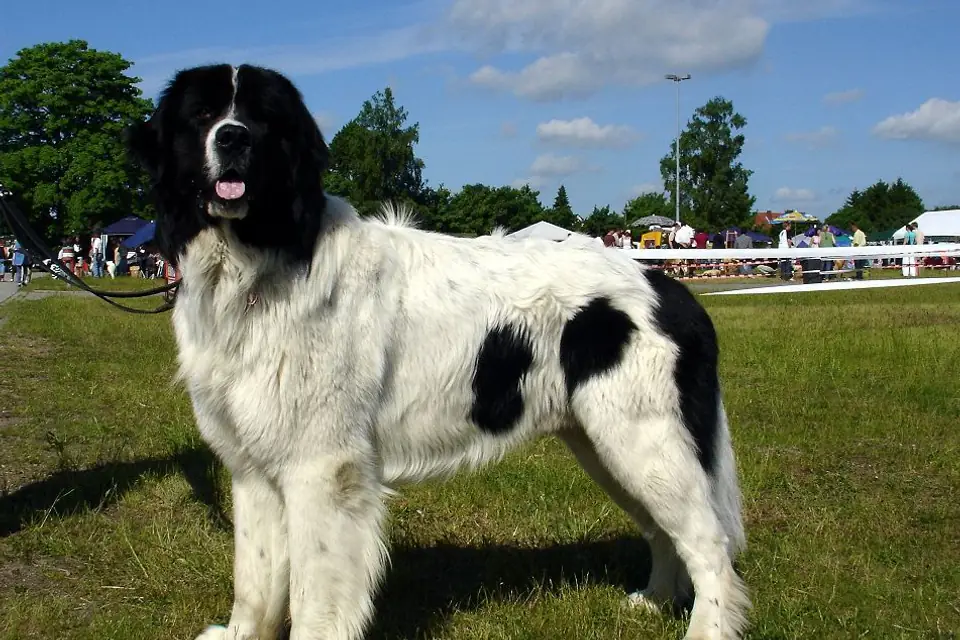
Calm, gentle and strongly attached to their household, with a noble expression and a friendly eye. They were kept as a guard and companion, so they notice visitors without being sharp about them.
The facts
- Size class Giant
- Country of origin Germany and Switzerland
- Adult weight Not published
- Adult weight in pounds Not published
- Adult height 67 to 80 cm
- Energy level Moderate
- Grooming Moderate
- Coat type Long double
- Typical lifespan 9 to 14 years
- Good with children Usually good
- Good with other dogs Fine with supervision
About the Landseer (European Continental Type)
The Landseer of European Continental type is a tall black and white water dog, developed in Germany and Switzerland from the parti-coloured Newfoundlands that Victorian painters made famous. They stand longer in the leg than a black Newfoundland and carry a lighter, more athletic frame, with webbed feet and a dense soft coat. The FCI standard asks males to reach 72 to 80 cm at the withers. Bred as a guard and companion, they are quiet indoors and strongly drawn to water.
Owning one means planning around size. A weekly session with a pin brush and a comb keeps the long double coat clear, with far more work when it drops. Exercise is moderate rather than punishing: steady walks and swimming suit them better than sprinting or jumping. Training has to start in puppyhood, because a dog of this weight that has learned to lean on the lead is very hard to undo. New owners underestimate the floor space, the car space and the drool.
What to expect at eight weeks
At eight weeks a Landseer (European Continental Type) puppy is sleeping around 18 to 20 hours a day, is not house trained, and cannot hold on for more than an hour or two at a stretch. A giant breed puppy at eight weeks is already heavy and will keep growing for up to two years. Controlled growth matters more here than in any other size class, so a large breed specific puppy food and no overfeeding. Expect moderate energy, in short bursts separated by long naps. Grooming needs are moderate, so build the brushing habit now while the coat is still short and easy. The socialisation window is open and closing: everything they meet calmly now, from vacuum cleaners to men in hats, is easier for the rest of their life.
Health worth knowing about
Conditions this breed is reported to be predisposed to. Predisposed does not mean inevitable, it means ask about it.
- Cystinuria type I-A, an inherited failure to reabsorb cystine that leads to bladder and kidney stones, identified by DNA test
- Muscular dystrophy, first described in this breed, which shows as progressive muscle weakness and difficulty moving from an early age
- Dental disease, kept in check by regular tooth brushing and veterinary mouth checks
Your Landseer (European Continental Type) puppy's first six months
- Vaccination schedule, dated for your country.
- Worming and parasite schedule.
- Feeding calculator. Set expected adult size to Giant for a Landseer (European Continental Type).
- Adult size predictor, to check growth against the Not published adult range.
- Puppy names and the first week checklist.
Kit sizes: chew toys made for large breeds. Worked out the same way as the crate size calculator. PetMD bases a crate on the dog's own measurements, not weight or breed alone, so measure once the puppy is home.
Buying guides for this
Other giant breeds
Previous: Lancashire Heeler · Next: Lapponian Herder
Not veterinary advice. Breed information is general. Your own dog, and your own vet, always win.
Sources
- fci.be for adult weight and height, coat type and country of origin
- wisdompanel.com for life expectancy, energy, grooming and the temperament ratings and health notes
- Health notes from Landseer (European Continental Type) breed information at https://www.wisdompanel.com/en-us/dog-breeds/landseer. Discuss any of these with your own vet.
No published figure for adult weight, so nothing is shown rather than a guess.
Photo: Sunnygirl, CC BY-SA 3.0, via Wikimedia Commons, cropped. All photographers are listed on the photo credits page.