Breeds / Giant
Greater Swiss Mountain Dog puppies
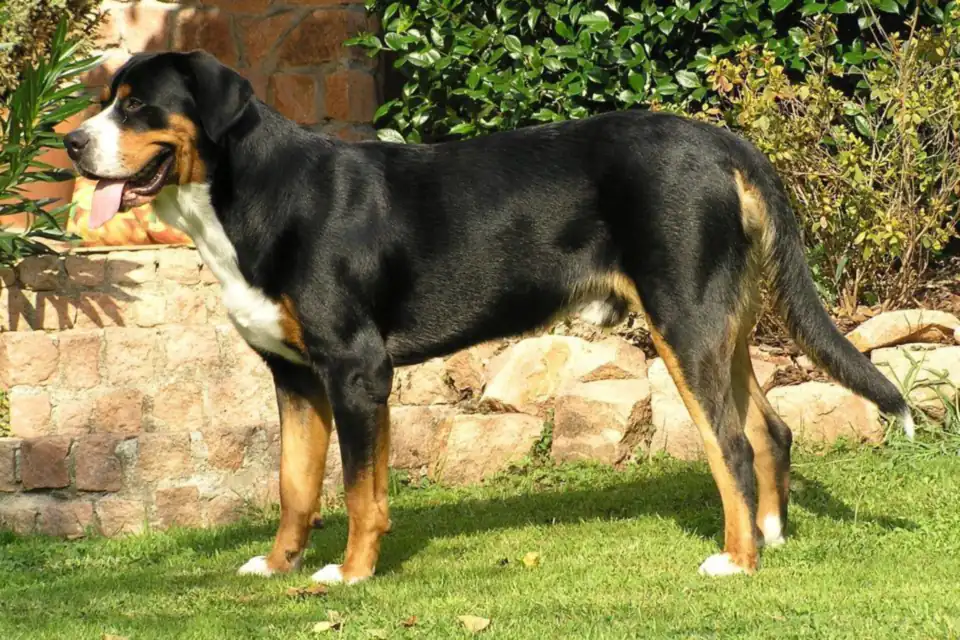
The Greater Swiss Mountain Dog is a large tricoloured draught and drover breed, dependable and family oriented with a short easy coat. They mature slowly and are strong enough that lead manners need to be taught early.
The facts
- Size class Giant
- Country of origin Switzerland
- Adult weight 38.6 to 63.5 kg
- Adult weight in pounds 85 to 140 lb
- Adult height 60 to 72 cm
- Energy level High
- Grooming Moderate
- Coat type Short smooth
- Shedding Moderate
- Typical lifespan 8 to 11 years
- Good with children Reliably good
- Good with other dogs Fine with supervision
About the Greater Swiss Mountain Dog
The Greater Swiss Mountain Dog is the largest of the four Swiss mountain breeds, a farm dog that pulled carts, moved cattle and watched the yard before machinery took the work away. They are heavy and square built, 60 to 72 cm and 38.6 to 63.5 kg, in a striking black, white and rust coat that is short and easy to keep. The character is steady rather than sharp: family oriented, confident, alert to strangers, and rated 5 out of 5 with children, which still means supervision and early socialisation.
Exercise is moderate for the size. A good walk or a wander in the woods suits them far better than a run alongside a bicycle, and hard work should wait while a slow maturing giant finishes growing. The coat needs an occasional bath and brush, plus a proper de-shedding session when the undercoat comes out twice a year. Heat is not their friend. Teach lead manners while the puppy is still small enough to lift, because a grown Swissy simply goes where they want.
What to expect at eight weeks
At eight weeks a Greater Swiss Mountain Dog puppy is sleeping around 18 to 20 hours a day, is not house trained, and cannot hold on for more than an hour or two at a stretch. A giant breed puppy at eight weeks is already heavy and will keep growing for up to two years. Controlled growth matters more here than in any other size class, so a large breed specific puppy food and no overfeeding. This is a high energy breed. At eight weeks that shows up as intensity rather than stamina, and they will need a job to do long before they need long walks. Grooming needs are moderate, so build the brushing habit now while the coat is still short and easy. The socialisation window is open and closing: everything they meet calmly now, from vacuum cleaners to men in hats, is easier for the rest of their life.
Health worth knowing about
Conditions this breed is reported to be predisposed to. Predisposed does not mean inevitable, it means ask about it.
- Splenic torsion, which occurs more often in this breed than in others and needs emergency surgery
- Gastric dilatation volvulus, a surgical emergency, risk rises with deep chests
- Hip and elbow dysplasia, screened by hip and elbow evaluation of breeding stock
- Shoulder osteochondrosis, screened by a shoulder evaluation and confirmed on x-ray
- Urinary incontinence, which is fairly common in puppies and spayed bitches and is usually treatable
- Epilepsy, diagnosed by ruling out other causes of seizures, with no genetic marker yet identified
Your Greater Swiss Mountain Dog puppy's first six months
- Vaccination schedule, dated for your country.
- Worming and parasite schedule.
- Feeding calculator. Set expected adult size to Giant for a Greater Swiss Mountain Dog.
- Adult size predictor, to check growth against the 38.6 to 63.5 kg adult range.
- Puppy names and the first week checklist.
Kit sizes: crate 48 inch (48 x 30 x 32 in, 122 x 76 x 81 cm) for an adult of up to 63.5 kg, the largest size in the chart, which tops out at 49.9 kg, so measure the dog before you buy; chew toys made for large breeds. Worked out the same way as the crate size calculator. PetMD bases a crate on the dog's own measurements, not weight or breed alone, so measure once the puppy is home.
Buying guides for this
Other giant breeds
More on the Greater Swiss Mountain Dog
Previous: Great Pyrenees · Next: Greenland Dog
Not veterinary advice. Breed information is general. Your own dog, and your own vet, always win.
Sources
- akc.org for adult weight and height, life expectancy, energy, grooming, shedding and the temperament ratings, coat type and health notes
- fci.be for country of origin
- Health notes from Greater Swiss Mountain Dog breed information at https://www.akc.org/dog-breeds/greater-swiss-mountain-dog/. Discuss any of these with your own vet.
Photo: KIKKUZZO88, derivative work by Pleple2000, Public domain, via Wikimedia Commons, cropped. All photographers are listed on the photo credits page.