Breeds / Giant
Great Dane puppies
The easygoing Great Dane is a dependable, friendly and patient giant that is gentle with children and eager to please their people.
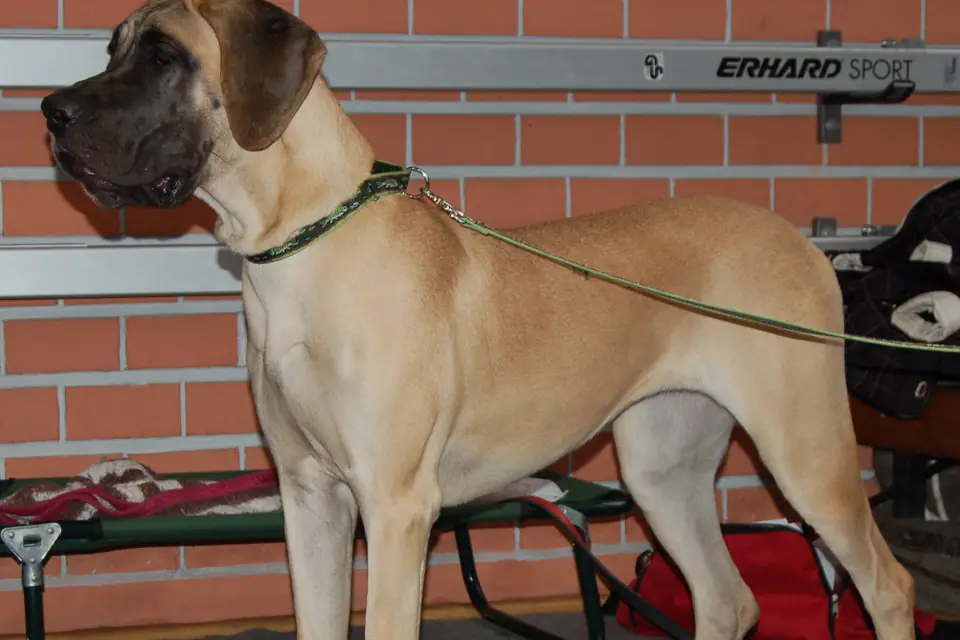
The facts
- Size class Giant
- Country of origin Germany
- Adult weight 49.9 to 79.4 kg
- Adult weight in pounds 110 to 175 lb
- Adult height 71 to 81 cm
- Energy level High
- Grooming Low
- Coat type Short smooth
- Shedding Moderate
- Typical lifespan 7 to 10 years
- Good with children Fine with supervision
- Good with other dogs Fine with supervision
About the Great Dane
The Great Dane is a German breed despite the name, developed from boarhounds and refined over the nineteenth century into a smooth coated estate guard and companion. They are genuinely giant, 71 to 81 cm at the shoulder and 49.9 to 79.4 kg, with a long arched neck, a deep chest and a short easy coat. The temperament has been bred towards softness: friendly, patient and dependent on human company, with a habit of leaning their whole weight against whoever is nearest.
Daily exercise means two or three brisk walks rather than distance running, and hard exercise should wait until about two years old to protect growing joints. Grooming is a weekly rub over with a mitt. The real work is training, because manners have to be installed while the puppy still weighs less than the owner. Bloat is the breed's biggest killer, so keep exercise away from mealtimes and learn the signs. Resist the urge to run or jump a young Dane too early.
What to expect at eight weeks
At eight weeks a Great Dane puppy is sleeping around 18 to 20 hours a day, is not house trained, and cannot hold on for more than an hour or two at a stretch. A giant breed puppy at eight weeks is already heavy and will keep growing for up to two years. Controlled growth matters more here than in any other size class, so a large breed specific puppy food and no overfeeding. This is a high energy breed. At eight weeks that shows up as intensity rather than stamina, and they will need a job to do long before they need long walks. Grooming is straightforward, but start handling the coat, feet and ears in week one anyway so it is never a fight later. The socialisation window is open and closing: everything they meet calmly now, from vacuum cleaners to men in hats, is easier for the rest of their life.
Health worth knowing about
Conditions this breed is reported to be predisposed to. Predisposed does not mean inevitable, it means ask about it.
- Bloat and gastric torsion, a risk shared by deep chested breeds
- Hip dysplasia, which breeding stock should be hip scored by x-ray before mating
- Cardiac disease and autoimmune thyroiditis, found on a cardiac examination with echocardiography and on a thyroid blood panel
- Panosteitis and other growth related bone problems in fast growing puppies, diagnosed on examination and radiographs
Your Great Dane puppy's first six months
- Vaccination schedule, dated for your country.
- Worming and parasite schedule.
- Feeding calculator. Set expected adult size to Giant for a Great Dane.
- Adult size predictor, to check growth against the 49.9 to 79.4 kg adult range.
- Puppy names and the first week checklist.
Kit sizes: crate 48 inch (48 x 30 x 32 in, 122 x 76 x 81 cm) for an adult of up to 79.4 kg, the largest size in the chart, which tops out at 49.9 kg, so measure the dog before you buy; chew toys made for large breeds. Worked out the same way as the crate size calculator. PetMD bases a crate on the dog's own measurements, not weight or breed alone, so measure once the puppy is home.
Buying guides for this
Other giant breeds
More on the Great Dane
Previous: Grand Bleu de Gascogne · Next: Great Pyrenees
Not veterinary advice. Breed information is general. Your own dog, and your own vet, always win.
Sources
- akc.org for adult weight and height, life expectancy, energy, grooming, shedding and the temperament ratings, coat type and health notes
- fci.be for country of origin
- Health notes from Great Dane breed information at https://www.akc.org/dog-breeds/great-dane/. Discuss any of these with your own vet.
Photo: Lilly M, CC BY-SA 2.5, via Wikimedia Commons, cropped. All photographers are listed on the photo credits page.