Breeds / Large
Japanese Akitainu puppies
Dignified, quiet and intensely loyal to their own household, aloof with strangers. An independent Japanese hunting spitz with a strong prey drive and little patience for unfamiliar dogs.
The facts
- Size class Large
- Country of origin Japan
- Adult weight 24.9 to 34 kg
- Adult weight in pounds 55 to 75 lb
- Adult height 57 to 70 cm
- Energy level Moderate
- Grooming Moderate
- Coat type Medium double
- Shedding Heavy, brush often
- Typical lifespan 10 to 12 years
- Good with children Fine with supervision
- Good with other dogs Not recommended
About the Japanese Akitainu
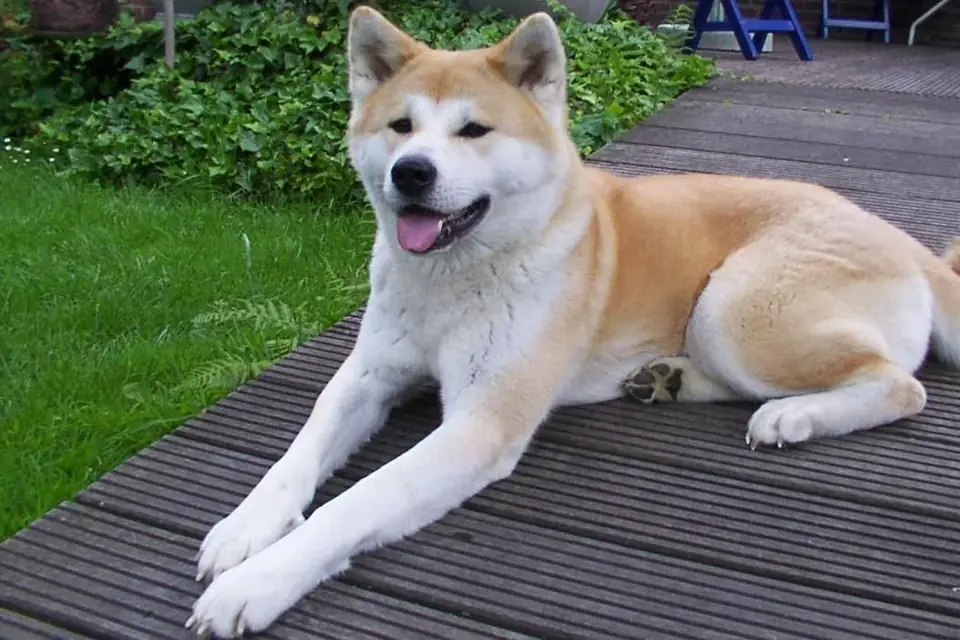
The Japanese Akitainu is the native Japanese form of the Akita, developed in the mountains of northern Japan from dogs used on bear, boar and deer, and kept separate from the heavier American Akita. This is a large, powerfully built spitz weighing 24.9 to 34 kg and standing 57 to 70 cm, with small triangular eyes, prick ears and a tail carried in a curl over the back. Living with one means living with a quiet, dignified dog that saves their warmth for their own household.
Exercise needs are moderate: daily walks, hikes and something to think about, but the lead stays on, because prey drive is high and the breed rates at the bottom of the scale for tolerating other animals. The medium double coat sheds heavily and blows out twice a year in handfuls, so a slicker brush and a forced air dryer earn their keep. They rate middling with children, so supervise and socialise. Skip the endless repetition in training, since this is an independent thinker that switches off when bored.
What to expect at eight weeks
At eight weeks a Japanese Akitainu puppy is sleeping around 18 to 20 hours a day, is not house trained, and cannot hold on for more than an hour or two at a stretch. A large breed puppy at eight weeks looks deceptively normal sized and will roughly double every few weeks for a while. Keep exercise short and low impact, the growth plates are wide open. Expect moderate energy, in short bursts separated by long naps. Grooming needs are moderate, so build the brushing habit now while the coat is still short and easy. The socialisation window is open and closing: everything they meet calmly now, from vacuum cleaners to men in hats, is easier for the rest of their life.
Health worth knowing about
Conditions this breed is reported to be predisposed to. Predisposed does not mean inevitable, it means ask about it.
- Hip dysplasia, screened by x-ray evaluation, which the national breed club requires of breeding stock
- Inherited eye disease, found by an ophthalmologist examination, also required by the club
- Autoimmune conditions such as sebaceous adenitis and uveodermatologic syndrome, diagnosed by a vet from skin or eye signs and biopsy, with no genetic test available
- Amelogenesis imperfecta, or enamel hypoplasia, which can be screened for
- Patellar luxation, detected on orthopaedic examination
- Autoimmune thyroiditis, screened by a thyroid blood panel
Your Japanese Akitainu puppy's first six months
- Vaccination schedule, dated for your country.
- Worming and parasite schedule.
- Feeding calculator. Set expected adult size to Large for a Japanese Akitainu.
- Adult size predictor, to check growth against the 24.9 to 34 kg adult range.
- Puppy names and the first week checklist.
Kit sizes: crate 42 inch (42 x 28 x 30 in, 107 x 71 x 76 cm) for an adult of up to 34 kg; chew toys made for large breeds. Worked out the same way as the crate size calculator. PetMD bases a crate on the dog's own measurements, not weight or breed alone, so measure once the puppy is home.
Buying guides for this
Other large breeds




More on the Japanese Akitainu
Previous: Jagdterrier · Next: Japanese Chin
Not veterinary advice. Breed information is general. Your own dog, and your own vet, always win.
Sources
- akc.org for adult weight and height, life expectancy, energy, grooming, shedding and the temperament ratings, coat type and health notes
- fci.be for country of origin
- Health notes from Japanese Akitainu breed information at https://www.akc.org/dog-breeds/japanese-akitainu/. Discuss any of these with your own vet.
Photo: B@rt, CC BY-SA 3.0, via Wikimedia Commons, cropped. All photographers are listed on the photo credits page.