Breeds / Small
Jagdterrier puppies
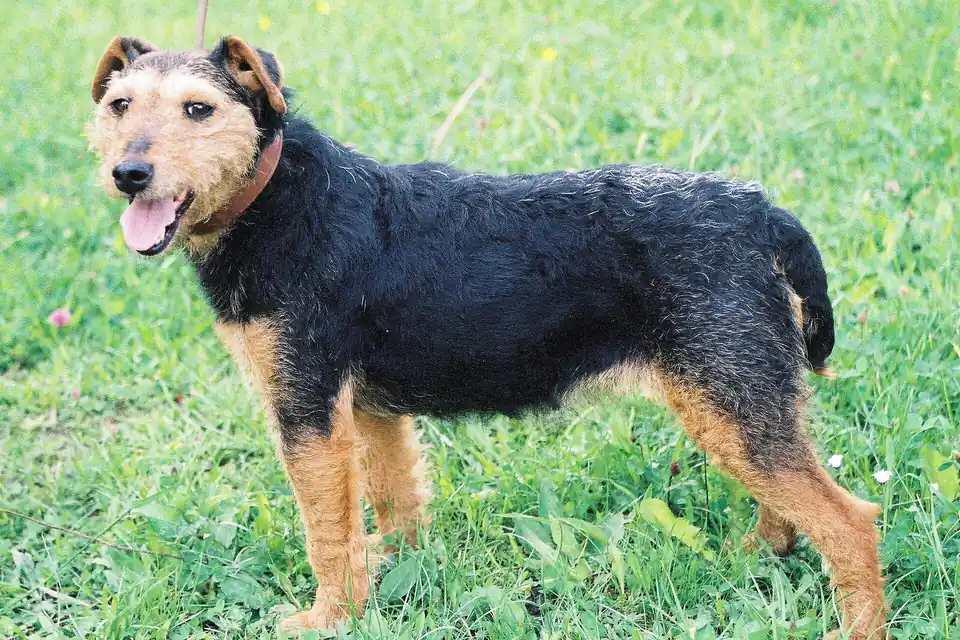
The Jagdterrier is a small, hard German hunting terrier bred to work fox and badger underground. They are fearless, focused and very high in prey drive, and they need real work rather than a companion role.
The facts
- Size class Small
- Country of origin Germany
- Adult weight 7.7 to 10 kg
- Adult weight in pounds 17 to 22 lb
- Adult height 33 to 41 cm
- Energy level Moderate
- Grooming Low
- Coat type Short rough and smooth and wiry
- Shedding Low
- Typical lifespan 10 to 12 years
- Good with children Fine with supervision
- Good with other dogs Fine with supervision
About the Jagdterrier
The Jagdterrier, or German Hunting Terrier, was created in Germany after the First World War by breeders who wanted a hard, black and tan working terrier that would go to ground on fox and badger and also work above ground on game. They are small and compact, 7.7 to 10 kg at 33 to 41 cm, in a harsh coat that comes rough, smooth or broken. The temperament was selected for nerve rather than charm: fearless, focused, tough with pain and very high in prey drive.
This is a working dog first. They need daily physical work and a mental outlet, whether that is hunting, earthdog trials, agility or serious training sessions, and a bored one takes the house apart. Grooming is a weekly brush plus nails, ears and teeth. Fencing must be secure and dug in, because they will follow anything into a hole, and they are not safe with rabbits, rodents or birds. Do not let the small size persuade you that this is a family pet.
What to expect at eight weeks
At eight weeks a Jagdterrier puppy is sleeping around 18 to 20 hours a day, is not house trained, and cannot hold on for more than an hour or two at a stretch. A small breed puppy at eight weeks is light enough to carry everywhere, which is exactly how you get them socialised before the vaccination course finishes. They will still need four meals a day. Expect moderate energy, in short bursts separated by long naps. Grooming is straightforward, but start handling the coat, feet and ears in week one anyway so it is never a fight later. The socialisation window is open and closing: everything they meet calmly now, from vacuum cleaners to men in hats, is easier for the rest of their life.
Health worth knowing about
Conditions this breed is reported to be predisposed to. Predisposed does not mean inevitable, it means ask about it.
- Few breed specific inherited diseases are recorded, so ask to see hip and eye screening on both parents
- Patellar luxation, a slipping kneecap, found on a patella evaluation
- Working injuries and ear infections, which is why the ears, eyes and skin should be checked after a day in cover
Your Jagdterrier puppy's first six months
- Vaccination schedule, dated for your country.
- Worming and parasite schedule.
- Feeding calculator. Set expected adult size to Small for a Jagdterrier.
- Adult size predictor, to check growth against the 7.7 to 10 kg adult range.
- Puppy names and the first week checklist.
Kit sizes: crate 24 inch (24 x 18 x 20 in, 61 x 46 x 51 cm) for an adult of up to 10 kg; chew toys made for small breeds. Worked out the same way as the crate size calculator. PetMD bases a crate on the dog's own measurements, not weight or breed alone, so measure once the puppy is home.
Buying guides for this
Other small breeds
More on the Jagdterrier
Previous: Jackapoo · Next: Japanese Akitainu
Not veterinary advice. Breed information is general. Your own dog, and your own vet, always win.
Sources
- akc.org for adult weight and height, life expectancy, energy, grooming, shedding and the temperament ratings, coat type and health notes
- fci.be for country of origin
- Health notes from Jagdterrier breed information at https://www.akc.org/dog-breeds/jagdterrier/. Discuss any of these with your own vet.
Photo: Pleple2000, CC BY-SA 3.0, via Wikimedia Commons, cropped. All photographers are listed on the photo credits page.