Breeds / Giant
Dogue de Bordeaux puppies
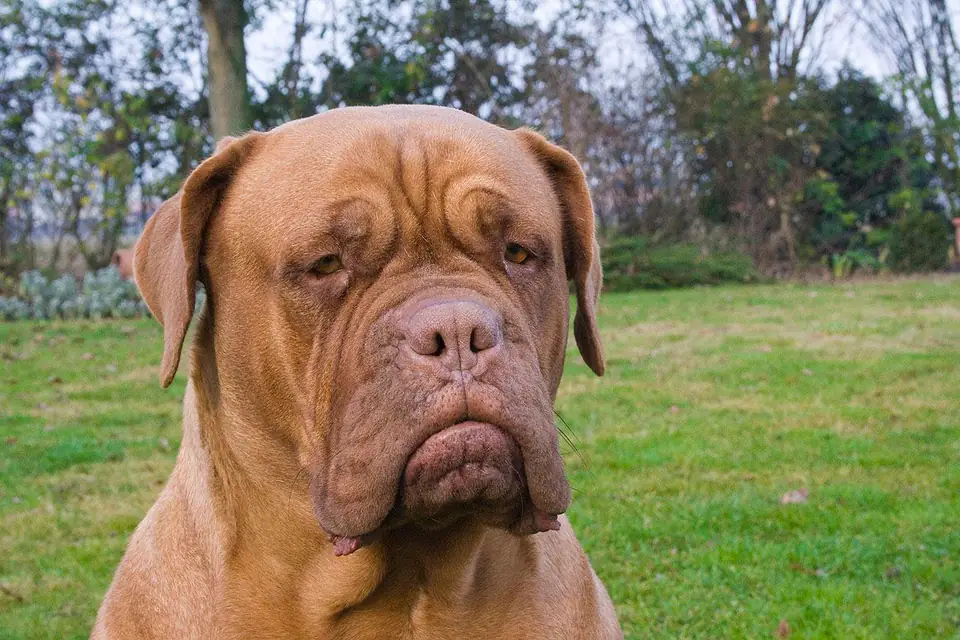
The Dogue de Bordeaux is a mastiff type guardian with a massive head, a short fawn coat and a naturally vigilant temperament without aggression. They are affectionate with their family, drool heavily and have one of the shortest lifespans of any breed.
The facts
- Size class Giant
- Country of origin France
- Adult weight 44.9 to 49.9 kg
- Adult weight in pounds 99 to 110 lb
- Adult height 58 to 66 cm
- Energy level Moderate
- Grooming Low
- Coat type Short smooth
- Shedding Heavy, brush often
- Typical lifespan 5 to 8 years
- Good with children Fine with supervision
- Good with other dogs Fine with supervision
About the Dogue de Bordeaux
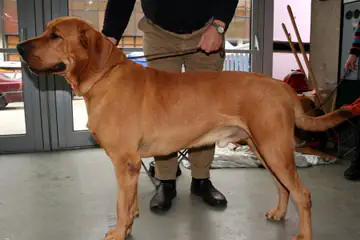
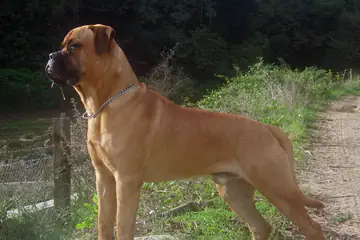
The Dogue de Bordeaux is an old French mastiff, used over the centuries as a guardian of property and stock and as a hauling dog around the wine trade. They carry one of the largest heads of any breed on a short, thick, heavily muscled body with a fawn coat and a dark or red mask. Bordeaux are slow and deliberate, deeply attached to their household, watchful with strangers rather than reactive, and calm indoors once they are mature.
Exercise is moderate but has to be managed. Young dogs need flat, low impact work, no charging up stairs or jumping off furniture, until the joints have finished. The coat is simple, the face is not: the wrinkles need wiping and drying, and the drool goes everywhere. This is a giant breed with a short lifespan and expensive problems, so budget accordingly. Go easy on exercise while they grow: a heavy puppy should not be worked like a retriever.
What to expect at eight weeks
At eight weeks a Dogue de Bordeaux puppy is sleeping around 18 to 20 hours a day, is not house trained, and cannot hold on for more than an hour or two at a stretch. A giant breed puppy at eight weeks is already heavy and will keep growing for up to two years. Controlled growth matters more here than in any other size class, so a large breed specific puppy food and no overfeeding. Expect moderate energy, in short bursts separated by long naps. Grooming is straightforward, but start handling the coat, feet and ears in week one anyway so it is never a fight later. The socialisation window is open and closing: everything they meet calmly now, from vacuum cleaners to men in hats, is easier for the rest of their life.
Health worth knowing about
Conditions this breed is reported to be predisposed to. Predisposed does not mean inevitable, it means ask about it.
- Gastric dilatation volvulus, a surgical emergency, risk rises with deep chests, so owners should learn the signs
- Hip and elbow dysplasia, screened by hip and elbow evaluation of breeding stock
- Cardiac disease, screened by a cardiac exam on breeding stock
- Shoulder osteochondrosis, screened by a shoulder evaluation and confirmed on x-ray
- Epilepsy, diagnosed by ruling out other causes of seizures
- Cancer, which is a leading cause of death in the breed and is why lumps should be checked early
Your Dogue de Bordeaux puppy's first six months
- Vaccination schedule, dated for your country.
- Worming and parasite schedule.
- Feeding calculator. Set expected adult size to Giant for a Dogue de Bordeaux.
- Adult size predictor, to check growth against the 44.9 to 49.9 kg adult range.
- Puppy names and the first week checklist.
Kit sizes: crate 48 inch (48 x 30 x 32 in, 122 x 76 x 81 cm) for an adult of up to 49.9 kg; chew toys made for large breeds. Worked out the same way as the crate size calculator. PetMD bases a crate on the dog's own measurements, not weight or breed alone, so measure once the puppy is home.
Buying guides for this
Other giant breeds
More on the Dogue de Bordeaux
Previous: Dogo Argentino · Next: Dorgi
Not veterinary advice. Breed information is general. Your own dog, and your own vet, always win.
Sources
- akc.org for adult weight and height, life expectancy, energy, grooming, shedding and the temperament ratings, coat type and health notes
- fci.be for country of origin
- Health notes from Dogue de Bordeaux breed information at https://www.akc.org/dog-breeds/dogue-de-bordeaux/. Discuss any of these with your own vet.
Photo: spaceodissey, CC BY 2.0, via Wikimedia Commons, cropped. All photographers are listed on the photo credits page.