Alaskan Klee Kai vs Siberian Husky
The two published breed profiles side by side: size, energy, grooming, lifespan, temperament ratings and health.
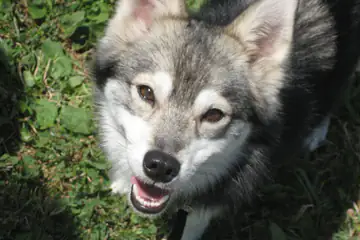

| Alaskan Klee Kai | Siberian Husky | |
|---|---|---|
| Size class | Small | Medium |
| Adult weight | 2.7 to 11.3 kg | 15.9 to 27.2 kg |
| In pounds | 6 to 25 lb | 35 to 60 lb |
| Adult height | 30 to 43 cm | 51 to 60 cm |
| Energy | Moderate | Very high |
| Grooming | Moderate | Moderate |
| Coat | Medium double | Medium double |
| Shedding | Moderate | High |
| Lifespan | 13 to 16 years | 12 to 14 years |
| Good with children | Fine with supervision | Reliably good |
| Good with other dogs | Reliably good | Reliably good |
| Country of origin | United States | United States |
The main differences
- The Siberian Husky is the bigger dog: 15.9 to 27.2 kg against 2.7 to 11.3 kg for the Alaskan Klee Kai.
- The Siberian Husky needs more exercise: very high energy against moderate for the Alaskan Klee Kai.
- Grooming is moderate for both.
- The Alaskan Klee Kai usually lives longer: 13 to 16 years against 12 to 14 years.
- With children, the Siberian Husky is rated reliably good and the Alaskan Klee Kai fine with supervision.
Temperament
Alaskan Klee Kai: Clever, quick and strongly bonded to their own people, the Alaskan Klee Kai is a companion sized spitz with the markings of a sled dog. They are reserved with strangers, vocal, and have enough prey drive that they should not be loose off lead.
Siberian Husky: The Siberian Husky is friendly, fastidious and dignified, an outgoing and loyal northern breed with a mischievous streak.
Health worth asking about
Conditions each breed is reported to be predisposed to. Predisposed does not mean inevitable: it means ask the breeder for the parents' test results.
Alaskan Klee Kai
- Patellar luxation, graded by a veterinary orthopaedic exam
- Autoimmune thyroiditis, screened by a thyroid evaluation of breeding stock
- Heart murmurs and other cardiac disease, picked up on a cardiac exam
- Inherited eye disease, screened by an ophthalmologist evaluation
- Factor VII deficiency, a mild inherited bleeding disorder detectable by DNA test
Siberian Husky
- Hip dysplasia, though the incidence in the breed is relatively low
- Inherited eye disease, though the incidence is relatively low
- Cancer, picked up on a veterinary examination with imaging and biopsy of any new lump
- Arthritis in older dogs, diagnosed on a veterinary orthopaedic exam and x-rays
Common questions
Which is bigger, the Alaskan Klee Kai or the Siberian Husky?
The Siberian Husky. Adults weigh 15.9 to 27.2 kg, against 2.7 to 11.3 kg for the Alaskan Klee Kai, going by the published breed profiles.
Which lives longer, the Alaskan Klee Kai or the Siberian Husky?
The published life expectancy is 13 to 16 years for the Alaskan Klee Kai and 12 to 14 years for the Siberian Husky. These are typical ranges across the breed, not a promise about one dog.
Is the Alaskan Klee Kai or the Siberian Husky better with children?
The Siberian Husky scores higher for children (3 against 5 out of 5). Any dog needs supervising around young children, whatever their breed rating.
Related comparisons
Next
Not veterinary advice. Breed information is general. Your own dog, and your own vet, always win.
Sources
Every figure on this page comes from the two breed guides, which cite:
- akc.org for adult weight and height, life expectancy, energy, grooming, shedding and the temperament ratings, coat type, country of origin and health notes
- akc.org for adult weight and height, life expectancy, energy, grooming, shedding and the temperament ratings, coat type and health notes
- fci.be for country of origin