Breeds / Size not published
Saarloos Wolfhond puppies
Reserved, cautious and strongly bonded to their own people, the Saarloos Wolfhond is a Dutch wolfdog breed that avoids strangers rather than challenging them.
The facts
- Size class Not published
- Country of origin Netherlands
- Adult weight Not published
- Adult weight in pounds Not published
- Adult height Not published
- Energy level Moderate
- Grooming Low
- Coat type Short
- Shedding Moderate
- Typical lifespan Not published
- Good with children Fine with supervision
- Good with other dogs Not published
About the Saarloos Wolfhond
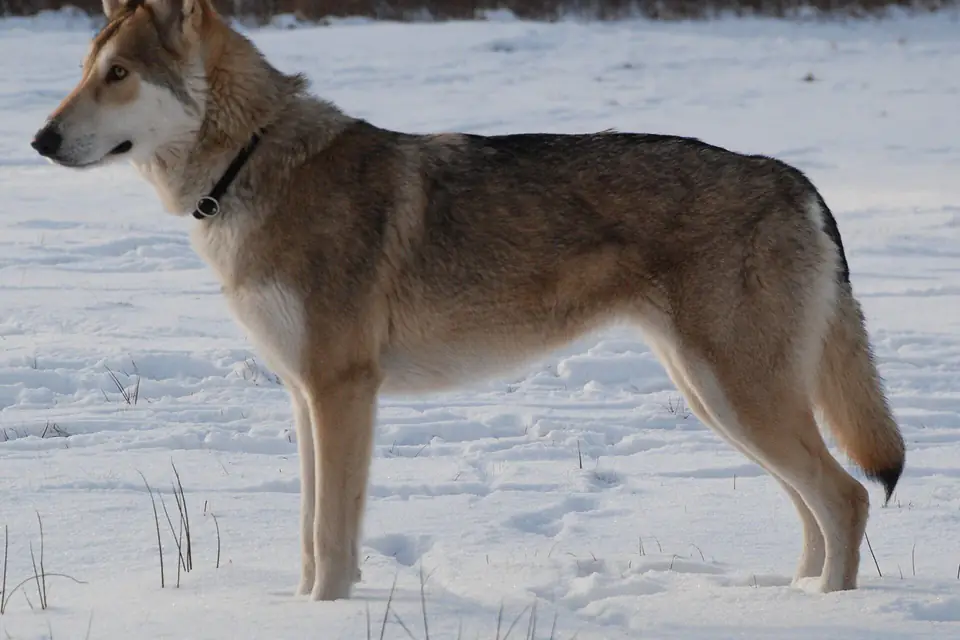
The Saarloos Wolfhond was created in the Netherlands early in the twentieth century by crossing a German Shepherd Dog with a European wolf, with the aim of putting hardiness back into a working breed. These dogs never amounted to much as workers but settled into a distinct breed of their own, wolfish in outline and coat pattern, long legged and light on their feet. Their defining trait is caution: they are reserved, watchful and inclined to retreat from anything new rather than face it down.
A Saarloos is best kept by someone who has had dogs before. They need moderate daily exercise, a very secure garden, and above all patient, unhurried socialisation from the day they arrive, because fear is a far bigger risk in this breed than aggression. Grooming is low, a brush through the coat with heavier work when they moult. They bark little. Rated three out of five with children, so supervision and early exposure are essential. Owners most often overestimate how far a Saarloos will bend to conventional obedience training.
The law in your country
This breed or type is restricted in some places. Check the current rules where you live before you commit to a puppy.
Australia
Dog and wolf crosses cannot be imported into Australia. The Department of Agriculture lists the Saarloos wolfdog or Saarloos wolfhound by name among the domestic and non domestic hybrids that are prohibited under environment law, along with the other named wolfdog breeds, and refers questions to the Department of Climate Change, Energy, the Environment and Water. Source.
What to expect at eight weeks
At eight weeks a Saarloos Wolfhond puppy is sleeping around 18 to 20 hours a day, is not house trained, and cannot hold on for more than an hour or two at a stretch. Expect moderate energy, in short bursts separated by long naps. Grooming is straightforward, but start handling the coat, feet and ears in week one anyway so it is never a fight later. The socialisation window is open and closing: everything they meet calmly now, from vacuum cleaners to men in hats, is easier for the rest of their life.
Health worth knowing about
Conditions this breed is reported to be predisposed to. Predisposed does not mean inevitable, it means ask about it.
- Hip dysplasia, screened by x-ray evaluation of breeding stock
- Degenerative myelopathy, detectable by DNA test
- Pituitary dwarfism, detectable by DNA test on breeding stock
Your Saarloos Wolfhond puppy's first six months
- Vaccination schedule, dated for your country.
- Worming and parasite schedule.
- Feeding calculator.
- Adult size predictor, to check growth against the Not published adult range.
- Puppy names and the first week checklist.
Buying guides for this
More on the Saarloos Wolfhond
Previous: Russian Tsvetnaya Bolonka · Next: Saluki
Not veterinary advice. Breed information is general. Your own dog, and your own vet, always win.
Sources
- akc.org for adult weight and height, life expectancy, energy, grooming, shedding and the temperament ratings, coat type and health notes
- fci.be for country of origin
- agriculture.gov.au for the legal status notes
- Health notes from Saarloos Wolfhond breed information at https://www.akc.org/dog-breeds/saarloos-wolfhond/. Discuss any of these with your own vet.
No published figure for adult weight, adult height, life expectancy and the good with other dogs rating, so nothing is shown rather than a guess.
Photo: Claudia Schröder, CC BY-SA 4.0, via Wikimedia Commons, cropped. All photographers are listed on the photo credits page.