Breeds / Toy
Norfolk Terrier puppies
Hardy, cheerful and fearless for their size, a small drop eared working terrier that is sociable with people and other dogs but keeps a serious prey drive.
The facts
- Size class Toy
- Country of origin Great Britain
- Adult weight 5 to 5.4 kg
- Adult weight in pounds 11 to 12 lb
- Adult height 23 to 25 cm
- Energy level High
- Grooming Moderate
- Coat type Short double and wiry
- Shedding Moderate
- Typical lifespan 12 to 16 years
- Good with children Reliably good
- Good with other dogs Fine with supervision
About the Norfolk Terrier
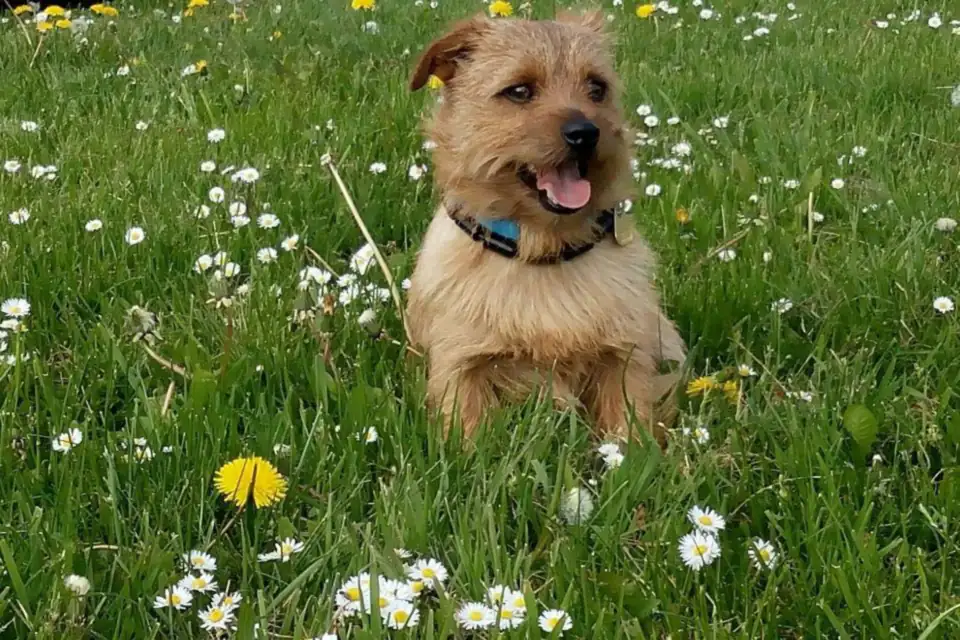
The Norfolk Terrier came from East Anglia, worked in packs to bolt fox and kill vermin, and was separated from the Norwich Terrier on the shape of their ears, which drop rather than stand. They are one of the smallest working terriers, 23 to 25 cm at the shoulder and around 5 to 5.4 kg, with a hard wiry outer coat over a soft insulating undercoat. Temperament is game and cheerful: confident with people, sociable with their own kind, and considerably braver than the size suggests.
Coat care is the deciding factor for most buyers. A wire jacket needs hand stripping to keep its texture and colour, so either learn the technique or find a groomer who offers it, since clipping softens and fades it. Exercise is long walks, fetch and company, with the lead on and a fenced garden, because the prey drive is intense. They rate highly with children, given supervision and sensible socialisation. New owners usually underestimate the digging and the readiness to chase anything small.
What to expect at eight weeks
At eight weeks a Norfolk Terrier puppy is sleeping around 18 to 20 hours a day, is not house trained, and cannot hold on for more than an hour or two at a stretch. A toy breed puppy at eight weeks is small enough to be genuinely fragile. They can be hurt by a jump off a sofa and by being stepped on, and toy breeds are prone to low blood sugar, so they need frequent small meals rather than two big ones. This is a high energy breed. At eight weeks that shows up as intensity rather than stamina, and they will need a job to do long before they need long walks. Grooming needs are moderate, so build the brushing habit now while the coat is still short and easy. The socialisation window is open and closing: everything they meet calmly now, from vacuum cleaners to men in hats, is easier for the rest of their life.
Health worth knowing about
Conditions this breed is reported to be predisposed to. Predisposed does not mean inevitable, it means ask about it.
- Upper airway syndrome, assessed by laryngoscopic examination under a breed screening scheme
- Heart disease including mitral valve disease, found on cardiac examination
- Inherited eye disease, screened by an ophthalmologist examination
- Patellar luxation, graded on veterinary orthopaedic examination
- Periodontal disease, kept down by regular tooth brushing and veterinary dental checks
Your Norfolk Terrier puppy's first six months
- Vaccination schedule, dated for your country.
- Worming and parasite schedule.
- Feeding calculator. Set expected adult size to Toy for a Norfolk Terrier.
- Adult size predictor, to check growth against the 5 to 5.4 kg adult range.
- Puppy names and the first week checklist.
Kit sizes: crate 22 inch (22 x 14 x 16 in, 56 x 36 x 41 cm) for an adult of up to 5.4 kg; chew toys made for small breeds. Worked out the same way as the crate size calculator. PetMD bases a crate on the dog's own measurements, not weight or breed alone, so measure once the puppy is home.
Buying guides for this
Other toy breeds
More on the Norfolk Terrier
Previous: Newfoundland · Next: Norrbottenspets
Not veterinary advice. Breed information is general. Your own dog, and your own vet, always win.
Sources
- akc.org for adult weight and height, life expectancy, energy, grooming, shedding and the temperament ratings, coat type and health notes
- fci.be for country of origin
- Health notes from Norfolk Terrier breed information at https://www.akc.org/dog-breeds/norfolk-terrier/. Discuss any of these with your own vet.
Photo: Masár, CC BY-SA 4.0, via Wikimedia Commons, cropped. All photographers are listed on the photo credits page.