Breeds / Toy
Bolognese puppies
A small white Italian companion dog, calm, quiet and closely attached to their people. They are easy to train and suit smaller homes, but they do not cope well with being left alone.
The facts
- Size class Toy
- Country of origin Italy
- Adult weight 2.7 to 4.5 kg
- Adult weight in pounds 6 to 10 lb
- Adult height 25 to 30 cm
- Energy level Low
- Grooming Moderate
- Coat type Long wavy
- Shedding Low
- Typical lifespan 12 to 14 years
- Good with children Reliably good
- Good with other dogs Reliably good
About the Bolognese
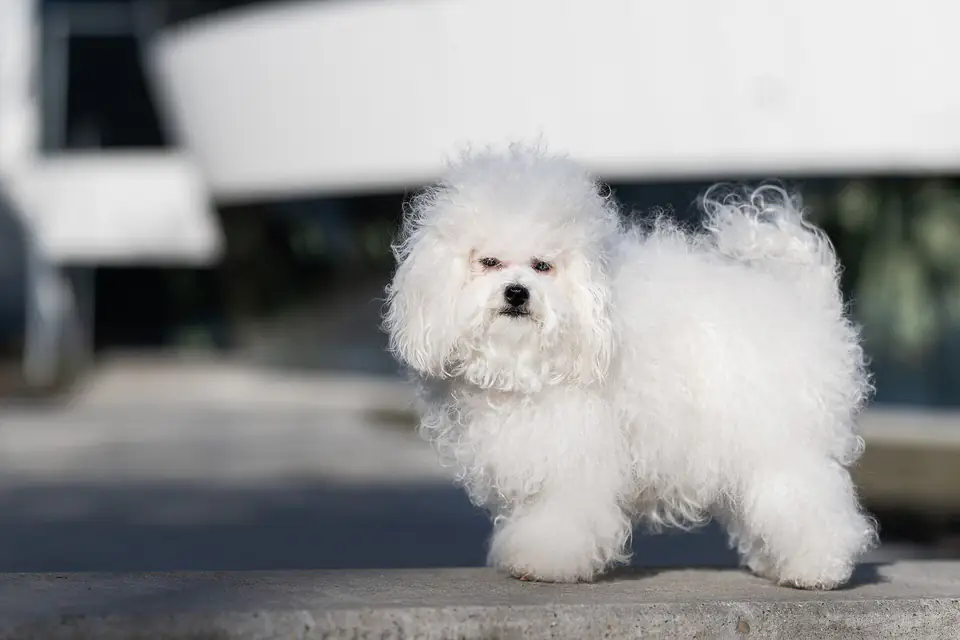
The Bolognese is an Italian companion breed from Bologna, related to the other bichon types and kept for centuries by the Italian nobility as a lap dog and a gift between courts. This is a small, square little dog of 25 to 30cm and 2.7 to 4.5kg, covered in a soft white coat that falls in loose flocks rather than tight curls. Their manner is calm and observant, closely attached to their own people, quiet by toy dog standards, and rated at the very top for trainability.
Exercise needs are low: indoor play, short walks and games are enough, which makes the breed a reasonable fit for a flat or a quieter household, including retired owners. The coat sheds very little but needs regular brushing to stay out of mats, whether kept full or trimmed shorter, plus routine ears, nails and teeth. The real risk with a Bolognese is separation. They were bred to be with someone all day, and they cope badly when left alone for long stretches.
What to expect at eight weeks
At eight weeks a Bolognese puppy is sleeping around 18 to 20 hours a day, is not house trained, and cannot hold on for more than an hour or two at a stretch. A toy breed puppy at eight weeks is small enough to be genuinely fragile. They can be hurt by a jump off a sofa and by being stepped on, and toy breeds are prone to low blood sugar, so they need frequent small meals rather than two big ones. Energy is on the lower side for the breed, but every eight week old puppy still runs in bursts and then crashes. Grooming needs are moderate, so build the brushing habit now while the coat is still short and easy. The socialisation window is open and closing: everything they meet calmly now, from vacuum cleaners to men in hats, is easier for the rest of their life.
Health worth knowing about
Conditions this breed is reported to be predisposed to. Predisposed does not mean inevitable, it means ask about it.
- Patellar luxation, a slipping kneecap, found on a patella evaluation
- Inherited eye disease, screened by an ophthalmologist evaluation
- Dental crowding and early tooth loss, managed by regular brushing and veterinary checks
Your Bolognese puppy's first six months
- Vaccination schedule, dated for your country.
- Worming and parasite schedule.
- Feeding calculator. Set expected adult size to Toy for a Bolognese.
- Adult size predictor, to check growth against the 2.7 to 4.5 kg adult range.
- Puppy names and the first week checklist.
Kit sizes: crate 22 inch (22 x 14 x 16 in, 56 x 36 x 41 cm) for an adult of up to 4.5 kg; chew toys made for small breeds. Worked out the same way as the crate size calculator. PetMD bases a crate on the dog's own measurements, not weight or breed alone, so measure once the puppy is home.
Buying guides for this
Other toy breeds

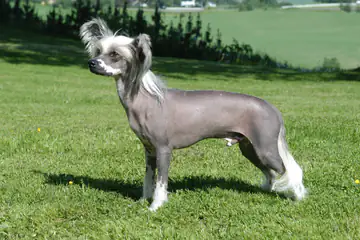
More on the Bolognese
Previous: Bohemian Shepherd · Next: Borador
Not veterinary advice. Breed information is general. Your own dog, and your own vet, always win.
Sources
- akc.org for adult weight and height, life expectancy, energy, grooming, shedding and the temperament ratings, coat type and health notes
- fci.be for country of origin
- Health notes from Bolognese breed information at https://www.akc.org/dog-breeds/bolognese/. Discuss any of these with your own vet.
Photo: Bolognese94, CC BY-SA 4.0, via Wikimedia Commons, cropped. All photographers are listed on the photo credits page.