Breeds / Medium
Borador puppies
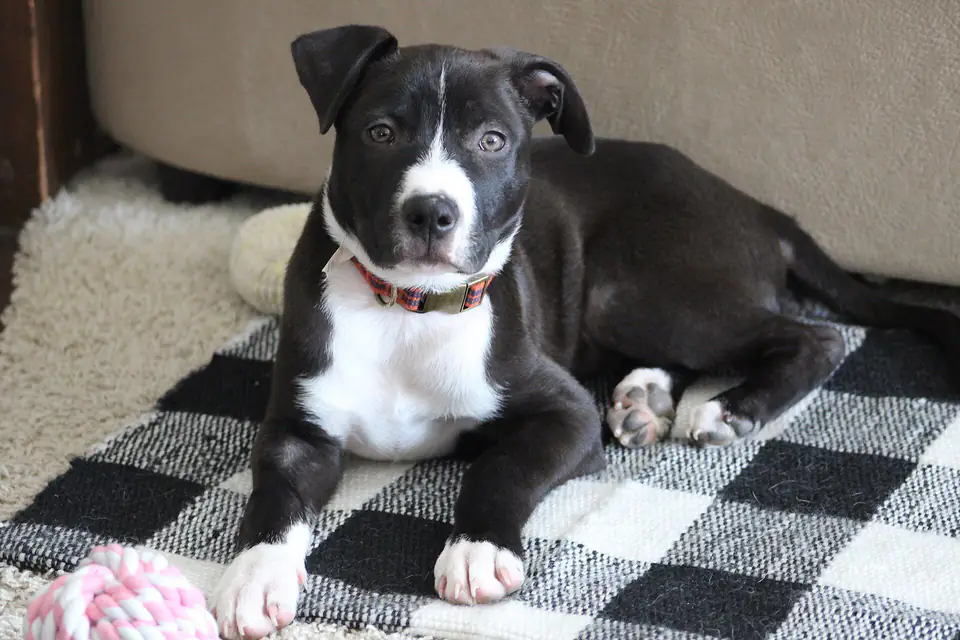
The Borador is an outgoing, friendly and very active Labrador and Border Collie cross that is quick to learn. They can inherit the Collie's urge to herd, the Labrador's urge to retrieve, or both.
The facts
- Size class Medium
- A cross of Labrador Retriever and Border Collie
- Country of origin Not published
- Adult weight 18 to 29.5 kg
- Adult weight in pounds 40 to 65 lb
- Adult height 48 to 61 cm
- Energy level Very high
- Grooming Low
- Coat type Short to medium
- Typical lifespan 10 to 15 years
- Good with children Not published
- Good with other dogs Not published
About the Borador
The Borador is a Labrador Retriever crossed with a Border Collie, bred on purpose since the early 2000s, although Purina UK notes the cross has probably happened naturally for much longer. Adults are 18 to 29.5 kg and 48 to 61 cm and live 10 to 15 years, in any Labrador or Collie colour, with or without white. Both parents are working breeds, and the cross is an extremely active dog that needs a lot of exercise, training and input, often more than most owners can provide.
Plan on two hours or more of exercise every day, plus training for mental work as well as obedience. They are easy to train but learn bad habits as fast as good ones, so start reward based training early. A Borador without an outlet can turn destructive, bark and try to round up children or other pets. Grooming is a weekly brush, though they shed. Plenty of Boradors end up in rescue centres, so check there first, and if you buy, ask to see hip, elbow and eye results for both parents.
A cross, not a breed. The Borador is a cross rather than a standardised breed, so size, coat and drive vary and can favour either parent, and puppies from one litter can differ. Purina UK notes that temperament is more consistent in first crosses than in later generations bred to each other, and both parents should be health tested as their own breeds would be.
What to expect at eight weeks
At eight weeks a Borador puppy is sleeping around 18 to 20 hours a day, is not house trained, and cannot hold on for more than an hour or two at a stretch. A medium breed puppy at eight weeks is a manageable armful that will not stay that way. Most of the growth happens between now and six months, so buy for the adult dog where you can. This is a very high energy breed. The mistake owners make is trying to tire them out physically. Training, scentwork and puzzles will do more than distance ever will. Grooming is straightforward, but start handling the coat, feet and ears in week one anyway so it is never a fight later. The socialisation window is open and closing: everything they meet calmly now, from vacuum cleaners to men in hats, is easier for the rest of their life.
Health worth knowing about
Conditions this breed is reported to be predisposed to. Predisposed does not mean inevitable, it means ask about it.
- Hip and elbow dysplasia, screened by hip and elbow scoring radiographs of both parents
- Inherited eye disease, screened by eye testing of both parents
- Collie eye anomaly from the Border Collie side, present from birth and usually detected by five to six weeks of age
- Multi-drug resistance mutation (MDR1) from the Border Collie side, detectable by DNA test and important to know before certain drugs are given
- Bloating and stomach problems, a risk in larger dogs that smaller, more frequent meals can help reduce
Your Borador puppy's first six months
- Vaccination schedule, dated for your country.
- Worming and parasite schedule.
- Feeding calculator. Set expected adult size to Medium for a Borador.
- Adult size predictor, to check growth against the 18 to 29.5 kg adult range.
- Puppy names and the first week checklist.
Kit sizes: crate 36 inch (36 x 24 x 26 in, 91 x 61 x 66 cm) for an adult of up to 29.5 kg; chew toys made for medium breeds. Worked out the same way as the crate size calculator. PetMD bases a crate on the dog's own measurements, not weight or breed alone, so measure once the puppy is home.
Buying guides for this
Other medium breeds
 American Cocker Spaniel
 American Pit Bull Terrier
 American Staffordshire Terrier
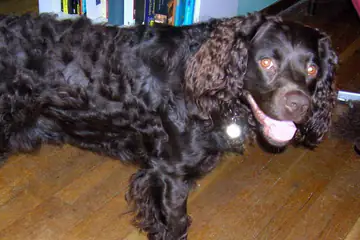 American Water Spaniel
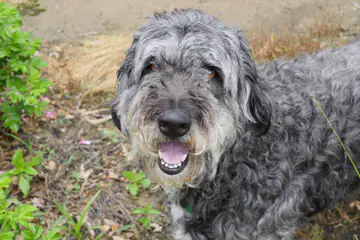 Aussiedoodle
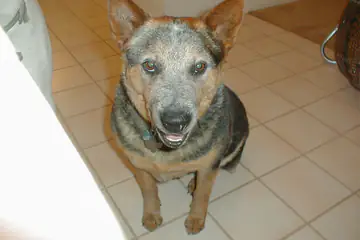 Australian Cattle Dog
More on the Borador
Previous: Bolognese · Next: Border Aussie
Not veterinary advice. Breed information is general. Your own dog, and your own vet, always win.
Sources
- purina.co.uk for adult weight and height, life expectancy, energy, grooming and the temperament ratings, coat type and health notes
- Health notes from Borador breed information at https://www.purina.co.uk/find-a-pet/dog-breeds/borador. Discuss any of these with your own vet.
No published figure for the good with children rating, the good with other dogs rating and country of origin, so nothing is shown rather than a guess.
Photo: H73kvg, CC BY-SA 4.0, via Wikimedia Commons, cropped. All photographers are listed on the photo credits page.