Breeds / Small
Miniature Schnauzer puppies
Alert, reliable and intelligent, primarily a companion dog.
The facts
- Size class Small
- Country of origin Germany
- Adult weight 5 to 9.1 kg
- Adult weight in pounds 11 to 20 lb
- Adult height 30 to 36 cm
- Energy level Moderate
- Grooming High
- Coat type Medium double and wiry
- Shedding Moderate
- Typical lifespan 12 to 15 years
- Good with children Reliably good
- Good with other dogs Fine with supervision
About the Miniature Schnauzer
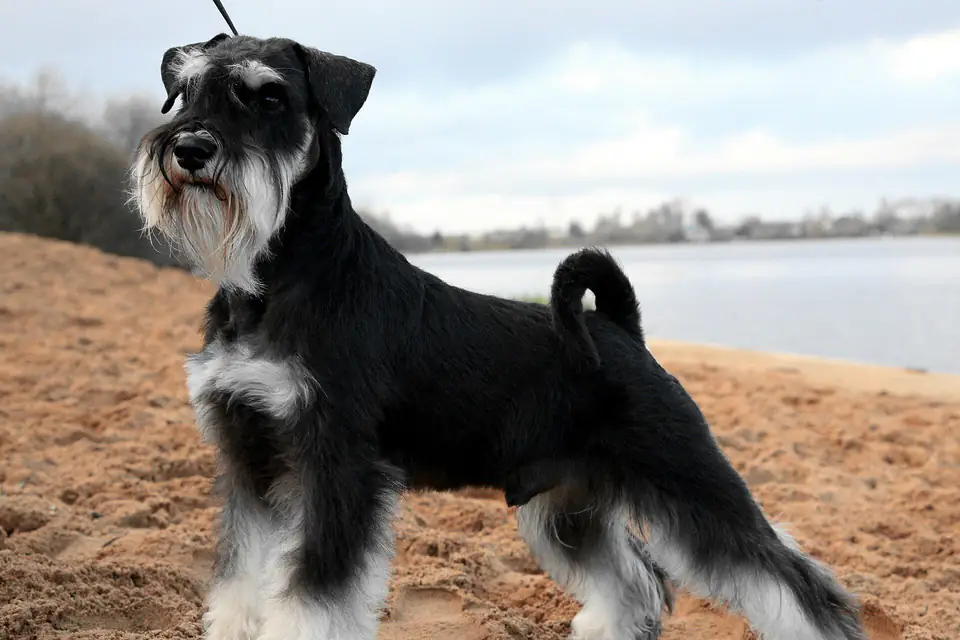
The Miniature Schnauzer came out of Germany, bred down from the Standard Schnauzer with smaller stock to make a farm ratter that could also raise the alarm. They stand 30 to 36 cm and weigh 5 to 9.1 kg, with a harsh wiry topcoat over a soft undercoat, plus the beard and eyebrows the breed is known for. They are alert and quick to learn, sociable and demonstrative with their own family, and very ready to tell you that someone is at the door.
Coat care is the real commitment. The wiry jacket needs frequent brushing and combing, plus hand stripping or a clipper trim every five to eight weeks, so budget for a groomer unless you learn to do it. Exercise is moderate, a couple of good walks and a safe space to run, and the prey drive means off lead freedom is a bad idea. Barking is the trait owners most often fail to manage. Watch the diet too, since the breed is prone to pancreatitis and raised blood fats.
What to expect at eight weeks
At eight weeks a Miniature Schnauzer puppy is sleeping around 18 to 20 hours a day, is not house trained, and cannot hold on for more than an hour or two at a stretch. A small breed puppy at eight weeks is light enough to carry everywhere, which is exactly how you get them socialised before the vaccination course finishes. They will still need four meals a day. Expect moderate energy, in short bursts separated by long naps. Grooming needs are high. Start daily brushing and short, positive handling sessions at eight weeks, well before the adult coat arrives, or the first professional groom will be traumatic. The socialisation window is open and closing: everything they meet calmly now, from vacuum cleaners to men in hats, is easier for the rest of their life.
Health worth knowing about
Conditions this breed is reported to be predisposed to. Predisposed does not mean inevitable, it means ask about it.
- Hereditary eye disease screened under the BVA/KC/ISDS Eye Scheme, including litter screening
- Mycobacterium avium complex susceptibility (MAC), detectable by DNA test on both parents
Your Miniature Schnauzer puppy's first six months
- Vaccination schedule, dated for your country.
- Worming and parasite schedule.
- Feeding calculator. Set expected adult size to Small for a Miniature Schnauzer.
- Adult size predictor, to check growth against the 5 to 9.1 kg adult range.
- Puppy names and the first week checklist.
Kit sizes: crate 24 inch (24 x 18 x 20 in, 61 x 46 x 51 cm) for an adult of up to 9.1 kg; chew toys made for small breeds. Worked out the same way as the crate size calculator. PetMD bases a crate on the dog's own measurements, not weight or breed alone, so measure once the puppy is home.
Buying guides for this
Other small breeds




More on the Miniature Schnauzer
Previous: Miniature Pinscher · Next: Morkie
Not veterinary advice. Breed information is general. Your own dog, and your own vet, always win.
Sources
- akc.org for adult weight and height, life expectancy, energy, grooming, shedding and the temperament ratings, coat type and health notes
- fci.be for country of origin
- Health notes from Miniature Schnauzer breed information at https://www.akc.org/dog-breeds/miniature-schnauzer/. Discuss any of these with your own vet.
Photo: Zorik07, CC BY-SA 3.0, via Wikimedia Commons, cropped. All photographers are listed on the photo credits page.