Breeds / Toy
Havanese puppies
The Havanese is funny, intelligent and outgoing, a friendly companion that is also a loyal watchdog for their family.
The facts
- Size class Toy
- Country of origin Cuba
- Adult weight 3.2 to 5.9 kg
- Adult weight in pounds 7 to 13 lb
- Adult height 22 to 29 cm
- Energy level Moderate
- Grooming High
- Coat type Long silky and double
- Shedding Low
- Typical lifespan 14 to 16 years
- Good with children Reliably good
- Good with other dogs Reliably good
About the Havanese
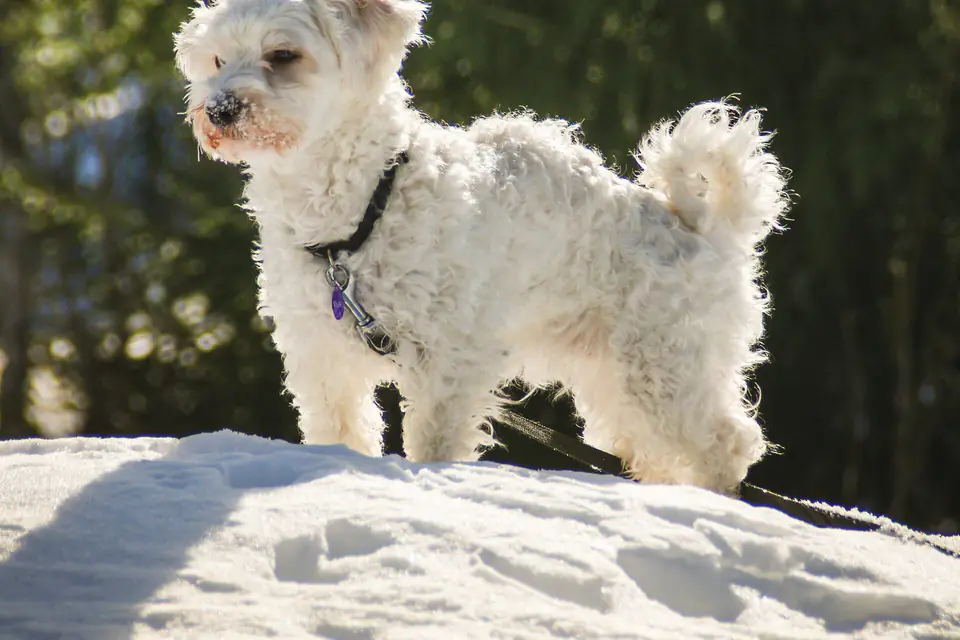
The Havanese is Cuba's national dog, descended from small bichon type dogs brought to the island by Spanish settlers and developed there into a companion for town households. They are properly small at 3.2 to 5.9 kg and 22 to 29 cm, under a long silky double coat that moves as the dog does, giving them a springy, slightly bouncing gait. The temperament is thoroughly social: comic, attentive and keen on company, rated 5 out of 5 with children and other pets given supervision and early socialisation.
Exercise is modest, a brisk walk and some play indoors. Coat is where the time goes, either daily combing to the skin or a short clip and regular grooming appointments, plus wiping the eye corners to limit tear staining. Havanese are quick to learn but slow to house train, and they are not built for long days alone. They bark readily at the door, rated 4 out of 5, so that needs managing early. Keep up the brushing between grooms so that fine coat does not mat.
What to expect at eight weeks
At eight weeks a Havanese puppy is sleeping around 18 to 20 hours a day, is not house trained, and cannot hold on for more than an hour or two at a stretch. A toy breed puppy at eight weeks is small enough to be genuinely fragile. They can be hurt by a jump off a sofa and by being stepped on, and toy breeds are prone to low blood sugar, so they need frequent small meals rather than two big ones. Expect moderate energy, in short bursts separated by long naps. Grooming needs are high. Start daily brushing and short, positive handling sessions at eight weeks, well before the adult coat arrives, or the first professional groom will be traumatic. The socialisation window is open and closing: everything they meet calmly now, from vacuum cleaners to men in hats, is easier for the rest of their life.
Health worth knowing about
Conditions this breed is reported to be predisposed to. Predisposed does not mean inevitable, it means ask about it.
- Patellar luxation, graded by a veterinary orthopaedic exam
- Hip dysplasia, which breeding stock should be hip scored by x-ray before mating
- Eye disease, screened by an annual ophthalmologist eye examination
- Congenital deafness, detectable by BAER testing
Your Havanese puppy's first six months
- Vaccination schedule, dated for your country.
- Worming and parasite schedule.
- Feeding calculator. Set expected adult size to Toy for a Havanese.
- Adult size predictor, to check growth against the 3.2 to 5.9 kg adult range.
- Puppy names and the first week checklist.
Kit sizes: crate 24 inch (24 x 18 x 20 in, 61 x 46 x 51 cm) for an adult of up to 5.9 kg; chew toys made for small breeds. Worked out the same way as the crate size calculator. PetMD bases a crate on the dog's own measurements, not weight or breed alone, so measure once the puppy is home.
Buying guides for this
Other toy breeds




More on the Havanese
Previous: Harrier · Next: Havapoo
Not veterinary advice. Breed information is general. Your own dog, and your own vet, always win.
Sources
- akc.org for adult weight and height, life expectancy, energy, grooming, shedding and the temperament ratings, coat type and health notes
- fci.be for country of origin
- royalkennelclub.com for the Royal Kennel Club exercise or grooming band, used where it asks for more than the AKC score
- Health notes from Havanese breed information at https://www.akc.org/dog-breeds/havanese/. Discuss any of these with your own vet.
Photo: QHuge, CC BY 4.0, via Wikimedia Commons, cropped. All photographers are listed on the photo credits page.