Breeds / Small
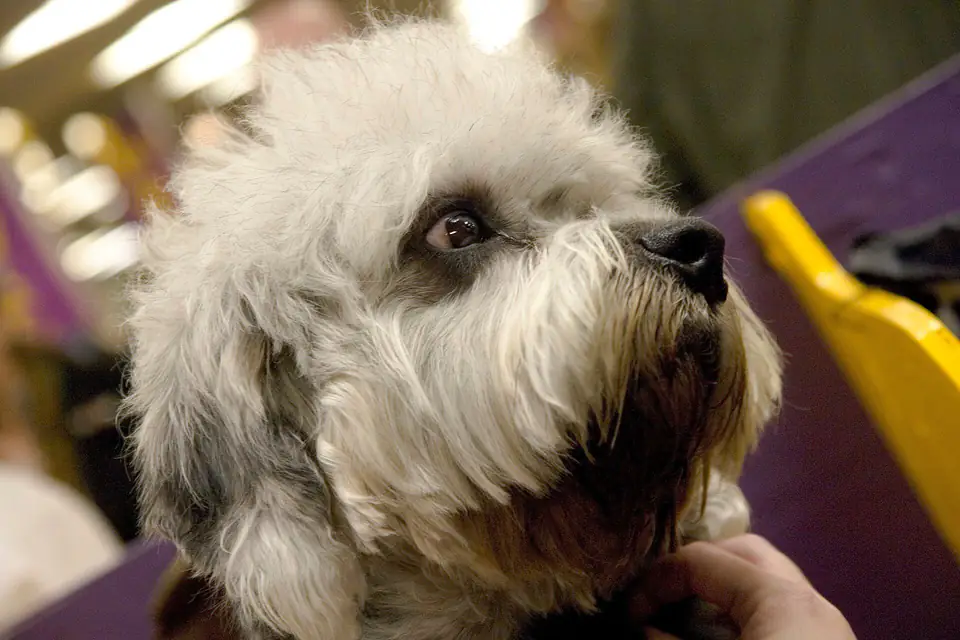
Dandie Dinmont Terrier puppies
A long bodied Scottish borders terrier with a domed head and silky topknot, calmer and more dignified than most of the group but still independent and quick to hunt.
The facts
- Size class Small
- Country of origin Great Britain
- Adult weight 8.2 to 10.9 kg
- Adult weight in pounds 18 to 24 lb
- Adult height 20 to 28 cm
- Energy level Moderate
- Grooming Moderate
- Coat type Medium double
- Shedding Low
- Typical lifespan 12 to 15 years
- Good with children Fine with supervision
- Good with other dogs Fine with supervision
About the Dandie Dinmont Terrier
The Dandie Dinmont Terrier comes from the border country between Scotland and England, where they were bred to hunt otter and badger, and they took their name from a farmer character in a Walter Scott novel. They weigh 8.2 to 10.9 kg and stands only 20 to 28 cm, long and low with a distinctly arched loin, a large domed head topped by a silky topknot, and a coat in pepper or mustard. They are more dignified and less frantic than most terriers, with a surprisingly deep bark.
Two brisk half hour walks a day suit them, always on lead or inside a fence because the hunting instinct still fires. The coat sheds very little but needs stripping of dead hair a couple of times a year plus regular brushing to stop it matting. They suit owners who want terrier character in a calmer package. Given the long back, do not encourage jumping on and off furniture, and keep the weight down.
What to expect at eight weeks
At eight weeks a Dandie Dinmont Terrier puppy is sleeping around 18 to 20 hours a day, is not house trained, and cannot hold on for more than an hour or two at a stretch. A small breed puppy at eight weeks is light enough to carry everywhere, which is exactly how you get them socialised before the vaccination course finishes. They will still need four meals a day. Expect moderate energy, in short bursts separated by long naps. Grooming needs are moderate, so build the brushing habit now while the coat is still short and easy. The socialisation window is open and closing: everything they meet calmly now, from vacuum cleaners to men in hats, is easier for the rest of their life.
Health worth knowing about
Conditions this breed is reported to be predisposed to. Predisposed does not mean inevitable, it means ask about it.
- Intervertebral disc disease, a risk in long backed breeds, which shows as back pain or hind limb weakness and is confirmed by imaging
- Primary glaucoma, screened by an ophthalmologist evaluation with gonioscopy and monitored by tonometry
- Hypothyroidism, screened by a thyroid evaluation
- Lymphoma, uncommon in the breed but worth investigating promptly if lymph nodes swell
Your Dandie Dinmont Terrier puppy's first six months
- Vaccination schedule, dated for your country.
- Worming and parasite schedule.
- Feeding calculator. Set expected adult size to Small for a Dandie Dinmont Terrier.
- Adult size predictor, to check growth against the 8.2 to 10.9 kg adult range.
- Puppy names and the first week checklist.
Kit sizes: crate 24 inch (24 x 18 x 20 in, 61 x 46 x 51 cm) for an adult of up to 10.9 kg; chew toys made for small breeds. Worked out the same way as the crate size calculator. PetMD bases a crate on the dog's own measurements, not weight or breed alone, so measure once the puppy is home.
Buying guides for this
Other small breeds

More on the Dandie Dinmont Terrier
Previous: Dalmatian · Next: Danish-Swedish Farmdog
Not veterinary advice. Breed information is general. Your own dog, and your own vet, always win.
Sources
- akc.org for adult weight and height, life expectancy, energy, grooming, shedding and the temperament ratings, coat type and health notes
- fci.be for country of origin
- Health notes from Dandie Dinmont Terrier breed information at https://www.akc.org/dog-breeds/dandie-dinmont-terrier/. Discuss any of these with your own vet.
Photo: audrey_sel, CC BY-SA 2.0, via Wikimedia Commons, cropped. All photographers are listed on the photo credits page.