Breeds / Large
Dalmatian puppies
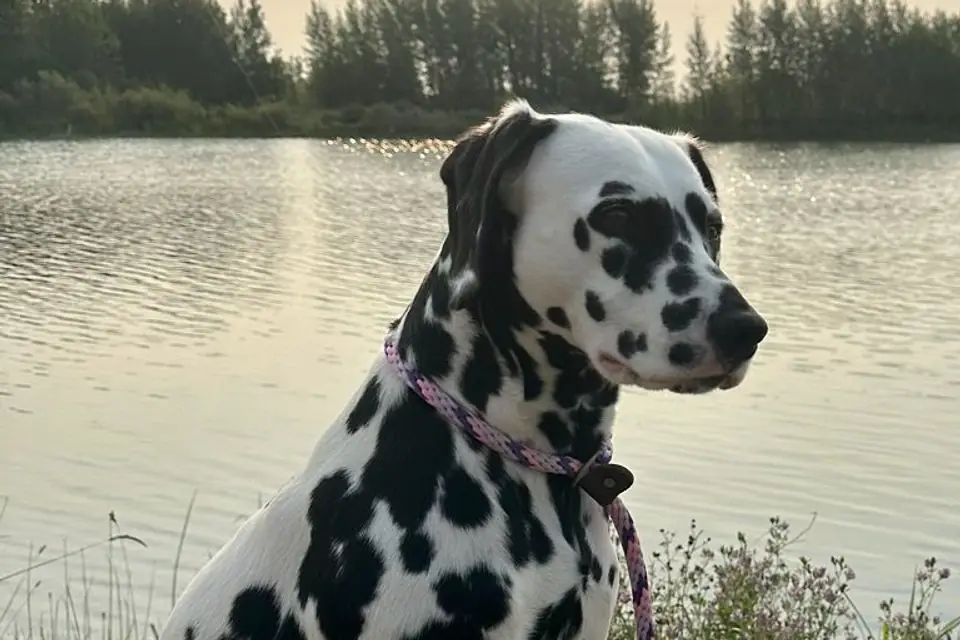
The Dalmatian is a muscular, spotted coaching dog built for distance trotting, outgoing and alert with a great deal of stamina. They shed heavily all year and need far more exercise than their size suggests.
The facts
- Size class Large
- Country of origin Croatia
- Adult weight 20.4 to 31.8 kg
- Adult weight in pounds 45 to 70 lb
- Adult height 48 to 61 cm
- Energy level High
- Grooming Moderate
- Coat type Short smooth
- Shedding Heavy, brush often
- Typical lifespan 11 to 13 years
- Good with children Fine with supervision
- Good with other dogs Fine with supervision
About the Dalmatian
The Dalmatian's early history is tangled, but the breed is associated with Croatia, and Dalmatians made their name in Britain running under and alongside horse drawn carriages, covering long distances and guarding the horses and the coaching inn at the end of the day. This is a clean, muscular dog of 20.4 to 31.8 kg standing 48 to 61 cm, built as a trotter, with a deep chest and a short dense spotted coat. They are outgoing, alert, sensitive to being excluded, and endlessly stamina driven.
Exercise matters more than anything with a Dalmatian: they want running, cycling or long hikes, though hard road work should wait until the joints mature at around two years. Despite the short coat they shed heavily all year and the white hairs weave into fabric. They suit a runner or a genuinely outdoor household, and they do badly in a sedentary one. New owners buy the spots and then discover the coaching dog underneath, along with the need for a BAER hearing test.
What to expect at eight weeks
At eight weeks a Dalmatian puppy is sleeping around 18 to 20 hours a day, is not house trained, and cannot hold on for more than an hour or two at a stretch. A large breed puppy at eight weeks looks deceptively normal sized and will roughly double every few weeks for a while. Keep exercise short and low impact, the growth plates are wide open. This is a high energy breed. At eight weeks that shows up as intensity rather than stamina, and they will need a job to do long before they need long walks. Grooming needs are moderate, so build the brushing habit now while the coat is still short and easy. The socialisation window is open and closing: everything they meet calmly now, from vacuum cleaners to men in hats, is easier for the rest of their life.
Health worth knowing about
Conditions this breed is reported to be predisposed to. Predisposed does not mean inevitable, it means ask about it.
- Congenital deafness, which affects a significant share of the breed, detected by BAER testing of whole litters
- Urate bladder and kidney stones, caused by the breed wide hyperuricosuria mutation, detectable by DNA test and managed with diet and water intake
- Hip dysplasia, screened by hip evaluation of breeding stock
- Dilated cardiomyopathy, investigated by physical exam, chest x-ray, echocardiogram and ECG
- Skin allergies and Dalmatian bronzing syndrome, diagnosed by a vet once other causes have been ruled out
Your Dalmatian puppy's first six months
- Vaccination schedule, dated for your country.
- Worming and parasite schedule.
- Feeding calculator. Set expected adult size to Large for a Dalmatian.
- Adult size predictor, to check growth against the 20.4 to 31.8 kg adult range.
- Puppy names and the first week checklist.
Kit sizes: crate 36 inch (36 x 24 x 26 in, 91 x 61 x 66 cm) for an adult of up to 31.8 kg; chew toys made for large breeds. Worked out the same way as the crate size calculator. PetMD bases a crate on the dog's own measurements, not weight or breed alone, so measure once the puppy is home.
Buying guides for this
Other large breeds

More on the Dalmatian
Previous: Dachshund · Next: Dandie Dinmont Terrier
Not veterinary advice. Breed information is general. Your own dog, and your own vet, always win.
Sources
- akc.org for adult weight and height, life expectancy, energy, grooming, shedding and the temperament ratings, coat type and health notes
- fci.be for country of origin
- Health notes from Dalmatian breed information at https://www.akc.org/dog-breeds/dalmatian/. Discuss any of these with your own vet.
Photo: Bradlien, CC BY-SA 4.0, via Wikimedia Commons, cropped. All photographers are listed on the photo credits page.