Breeds / Small
Patterdale Terrier puppies
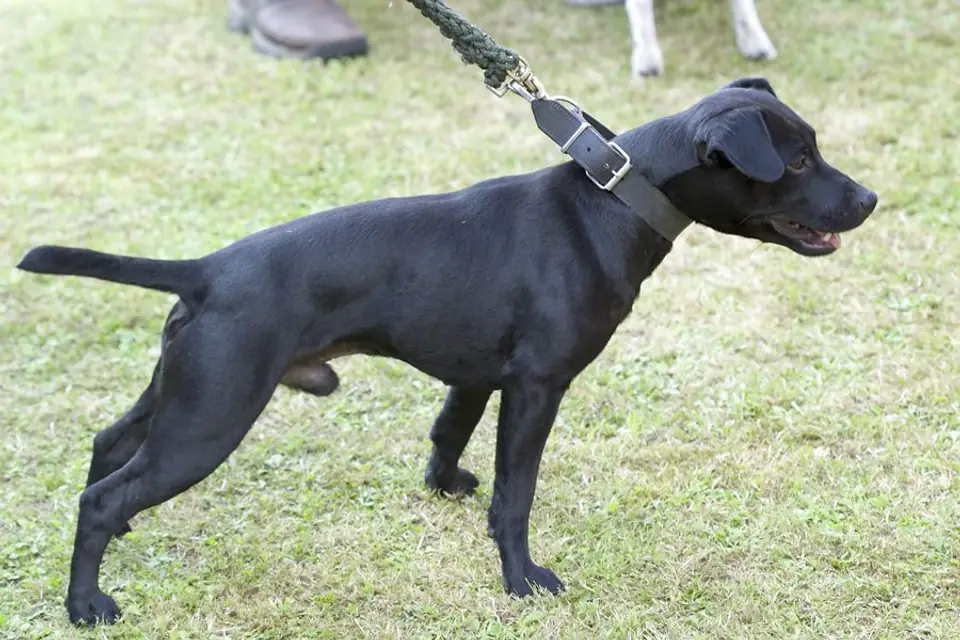
The Patterdale is an extremely courageous working terrier with a strong prey drive, very active and keen to work. Their UKC standard says plainly that they are not a dog for the average pet owner.
The facts
- Size class Small
- Country of origin Great Britain
- Adult weight 5 to 6 kg
- Adult weight in pounds 11 to 13 lb
- Adult height 25 to 38 cm
- Energy level Very high
- Grooming Moderate
- Coat type Short smooth, broken or rough
- Typical lifespan 10 to 12 years
- Good with children Not recommended
- Good with other dogs Not recommended
About the Patterdale Terrier
The Patterdale Terrier comes from the black, smooth coated Fell terriers of Northern England, which were kept to control the vermin that preyed on sheep, and the United Kennel Club recognised the breed on 1 January 1995. They are still worked far more than they are shown. Adults stand 25 to 38 cm and Purina UK gives a weight of 5 to 6 kg, with a chest narrow enough to be spanned by two hands so the dog can follow quarry underground. The coat may be smooth, broken or rough, always hard with a dense undercoat, usually black, chocolate or black and tan without white patches.
Purina UK's vet ratings put this terrier at five out of five for energy and one out of five for family friendliness, for living with other pets and for tolerating being alone, and suggest one to two hours of walking a day. They need a secure garden, a real outlet for their hunting drive and an owner who enjoys a determined terrier. Grooming is a weekly going over. People choose them for the size and are caught out by the drive: a Patterdale lives to hunt small furry animals, so think hard before bringing one into a home with cats, rabbits or rodents.
What to expect at eight weeks
At eight weeks a Patterdale Terrier puppy is sleeping around 18 to 20 hours a day, is not house trained, and cannot hold on for more than an hour or two at a stretch. A small breed puppy at eight weeks is light enough to carry everywhere, which is exactly how you get them socialised before the vaccination course finishes. They will still need four meals a day. This is a very high energy breed. The mistake owners make is trying to tire them out physically. Training, scentwork and puzzles will do more than distance ever will. Grooming needs are moderate, so build the brushing habit now while the coat is still short and easy. The socialisation window is open and closing: everything they meet calmly now, from vacuum cleaners to men in hats, is easier for the rest of their life.
Health worth knowing about
Conditions this breed is reported to be predisposed to. Predisposed does not mean inevitable, it means ask about it.
- Patellar luxation, where the kneecap slips out of place, graded on orthopaedic examination
- Primary lens luxation, where the lens moves out of its normal position in the eye, causing pain and vision loss, which needs prompt veterinary attention
Your Patterdale Terrier puppy's first six months
- Vaccination schedule, dated for your country.
- Worming and parasite schedule.
- Feeding calculator. Set expected adult size to Small for a Patterdale Terrier.
- Adult size predictor, to check growth against the 5 to 6 kg adult range.
- Puppy names and the first week checklist.
Kit sizes: crate 24 inch (24 x 18 x 20 in, 61 x 46 x 51 cm) for an adult of up to 6 kg; chew toys made for small breeds. Worked out the same way as the crate size calculator. PetMD bases a crate on the dog's own measurements, not weight or breed alone, so measure once the puppy is home.
Buying guides for this
Other small breeds




More on the Patterdale Terrier
Previous: Parson Russell Terrier · Next: Peekapoo
Not veterinary advice. Breed information is general. Your own dog, and your own vet, always win.
Sources
- purina.co.uk for adult weight and height, life expectancy, energy, grooming and the temperament ratings and health notes
- ukcdogs.com for coat type and country of origin
- Health notes from Patterdale Terrier breed information at https://www.purina.co.uk/find-a-pet/dog-breeds/patterdale-terrier. Discuss any of these with your own vet.
Photo: Alephalpha, CC BY-SA 3.0, via Wikimedia Commons, cropped. All photographers are listed on the photo credits page.