Breeds / Small
Norwegian Lundehund puppies
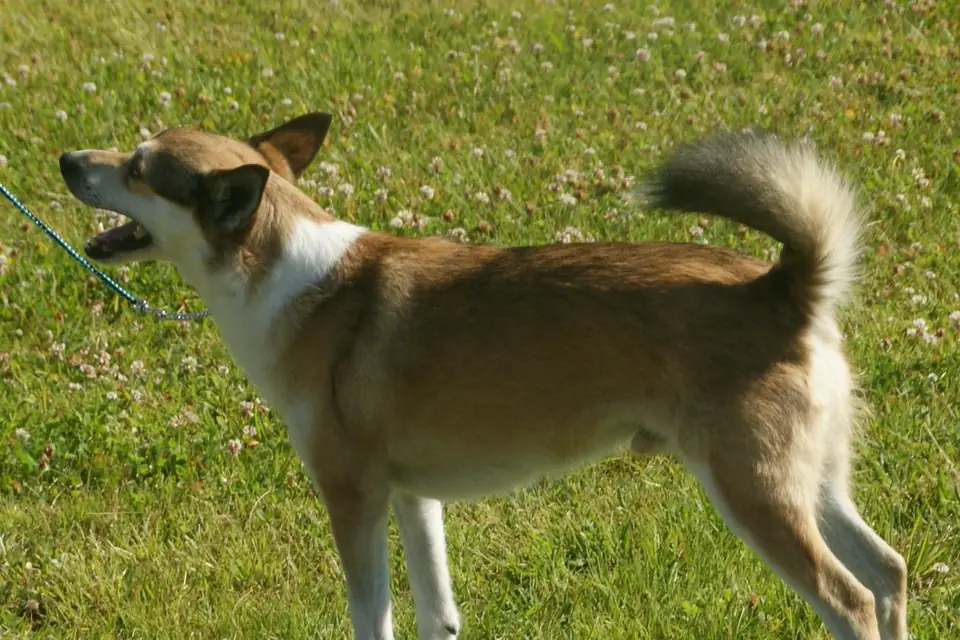
Alert, playful and distinctly independent, a small Norwegian cliff climbing spitz with unusual anatomy and a mind of their own.
The facts
- Size class Small
- Country of origin Norway
- Adult weight 5.4 to 8.2 kg
- Adult weight in pounds 12 to 18 lb
- Adult height 30 to 38 cm
- Energy level Moderate
- Grooming Moderate
- Coat type Short double
- Shedding Moderate
- Typical lifespan 12 to 15 years
- Good with children Fine with supervision
- Good with other dogs Fine with supervision
About the Norwegian Lundehund
The Lundehund was bred on the islands off northern Norway to climb sea cliffs and pull puffins from crevices, and their anatomy is unlike any other dog: at least six toes on each foot, shoulders that let the front legs extend sideways, and a neck flexible enough to bend back over the spine. This is a small spitz of 30 to 38 cm and 5.4 to 8.2 kg with a short double coat and pricked ears they can fold shut. They are alert, playful and notably independent minded.
Exercise is moderate, a brisk half hour walk or a couple of play sessions a day, and the coat needs only a weekly brush. Training is where owners struggle, because the breed is easily distracted and house training in particular takes patience. A Lundehund is a climber and a natural escape artist, so fences and gates need checking. Ratings with children and other pets are moderate, so supervise and socialise early. The thing to research hardest before buying is the digestive disorder that runs through the breed.
What to expect at eight weeks
At eight weeks a Norwegian Lundehund puppy is sleeping around 18 to 20 hours a day, is not house trained, and cannot hold on for more than an hour or two at a stretch. A small breed puppy at eight weeks is light enough to carry everywhere, which is exactly how you get them socialised before the vaccination course finishes. They will still need four meals a day. Expect moderate energy, in short bursts separated by long naps. Grooming needs are moderate, so build the brushing habit now while the coat is still short and easy. The socialisation window is open and closing: everything they meet calmly now, from vacuum cleaners to men in hats, is easier for the rest of their life.
Health worth knowing about
Conditions this breed is reported to be predisposed to. Predisposed does not mean inevitable, it means ask about it.
- Lundehund syndrome, a group of digestive disorders causing protein loss, investigated by blood protein testing and intestinal biopsy
- Patellar luxation, graded on veterinary orthopaedic examination
- Inherited eye disease, screened by an ophthalmologist examination
- Loss of genetic diversity from a very small founding population, managed by checking the inbreeding coefficient before mating
Your Norwegian Lundehund puppy's first six months
- Vaccination schedule, dated for your country.
- Worming and parasite schedule.
- Feeding calculator. Set expected adult size to Small for a Norwegian Lundehund.
- Adult size predictor, to check growth against the 5.4 to 8.2 kg adult range.
- Puppy names and the first week checklist.
Kit sizes: crate 24 inch (24 x 18 x 20 in, 61 x 46 x 51 cm) for an adult of up to 8.2 kg; chew toys made for small breeds. Worked out the same way as the crate size calculator. PetMD bases a crate on the dog's own measurements, not weight or breed alone, so measure once the puppy is home.
Buying guides for this
Other small breeds

More on the Norwegian Lundehund
Previous: Norwegian Elkhound · Next: Norwich Terrier
Not veterinary advice. Breed information is general. Your own dog, and your own vet, always win.
Sources
- akc.org for adult weight and height, life expectancy, energy, grooming, shedding and the temperament ratings, coat type and health notes
- fci.be for country of origin
- Health notes from Norwegian Lundehund breed information at https://www.akc.org/dog-breeds/norwegian-lundehund/. Discuss any of these with your own vet.
Photo: Canarian, CC BY-SA 4.0, via Wikimedia Commons, cropped. All photographers are listed on the photo credits page.