Breeds / Small
Mudi puppies
Lively, brave and highly alert, a Hungarian farm herder that is intensely trainable and very quick to use their voice.
The facts
- Size class Small
- Country of origin Hungary
- Adult weight 8.2 to 13.2 kg
- Adult weight in pounds 18 to 29 lb
- Adult height 38 to 47 cm
- Energy level Very high
- Grooming Low
- Coat type Medium curly
- Shedding Low
- Typical lifespan 12 to 14 years
- Good with children Fine with supervision
- Good with other dogs Fine with supervision
About the Mudi
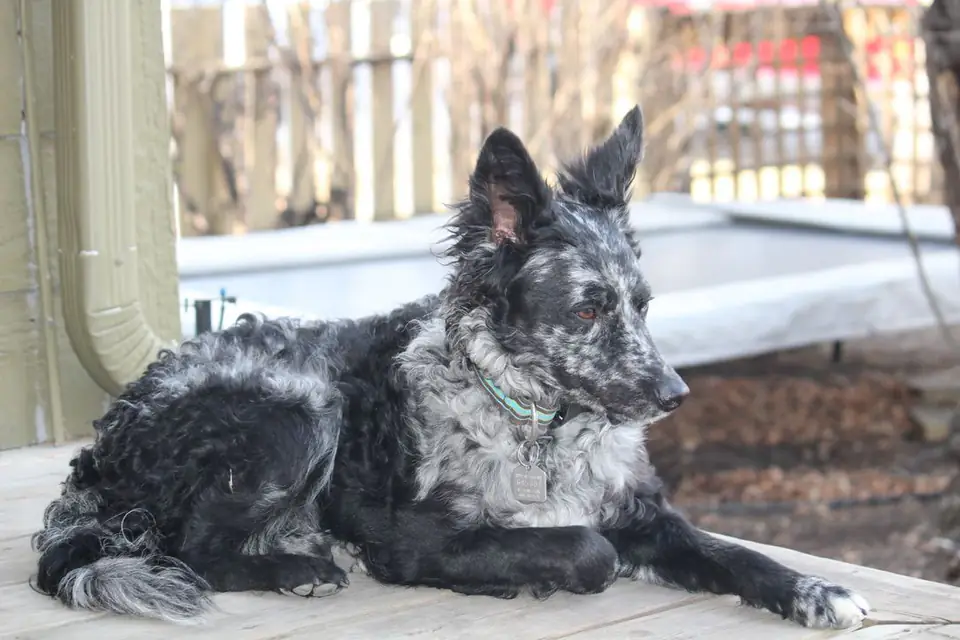
The Mudi is a Hungarian farm dog, a herding breed that took shape alongside the Puli and Pumi and was only described separately in the twentieth century. This is a small to medium dog of 38 to 47 cm and 8.2 to 13.2 kg, with a wedge shaped head, pricked ears and a curly coat that lies short on the face and longer over the body. They are bold, quick and extremely alert, the kind of dog that watches everything and reacts within a second.
Expect a very high energy animal. A Mudi will run, jump remarkably well, dig, and excel at flyball, agility and herding, and they need that outlet daily. Grooming is easy, occasional combing to lift dead hair plus routine nail care. The voice is the trade off, since a Mudi barks at movement and sound, and a bored one finds their own entertainment. Ratings with children and other pets are moderate, so supervise and socialise widely. New owners often expect a small dog and get a working sheepdog.
What to expect at eight weeks
At eight weeks a Mudi puppy is sleeping around 18 to 20 hours a day, is not house trained, and cannot hold on for more than an hour or two at a stretch. A small breed puppy at eight weeks is light enough to carry everywhere, which is exactly how you get them socialised before the vaccination course finishes. They will still need four meals a day. This is a very high energy breed. The mistake owners make is trying to tire them out physically. Training, scentwork and puzzles will do more than distance ever will. Grooming is straightforward, but start handling the coat, feet and ears in week one anyway so it is never a fight later. The socialisation window is open and closing: everything they meet calmly now, from vacuum cleaners to men in hats, is easier for the rest of their life.
Health worth knowing about
Conditions this breed is reported to be predisposed to. Predisposed does not mean inevitable, it means ask about it.
- Hip dysplasia, which breeding stock should be x-rayed and scored for
- Inherited eye disease including cataract, screened by an ophthalmologist examination
- Patellar luxation, graded on veterinary orthopaedic examination
- Epilepsy, diagnosed clinically once other causes have been ruled out
Your Mudi puppy's first six months
- Vaccination schedule, dated for your country.
- Worming and parasite schedule.
- Feeding calculator. Set expected adult size to Small for a Mudi.
- Adult size predictor, to check growth against the 8.2 to 13.2 kg adult range.
- Puppy names and the first week checklist.
Kit sizes: crate 30 inch (30 x 20 x 23 in, 76 x 51 x 58 cm) for an adult of up to 13.2 kg; chew toys made for small breeds. Worked out the same way as the crate size calculator. PetMD bases a crate on the dog's own measurements, not weight or breed alone, so measure once the puppy is home.
Buying guides for this
Other small breeds




More on the Mudi
Previous: Mountain Cur · Next: Murray River Retriever
Not veterinary advice. Breed information is general. Your own dog, and your own vet, always win.
Sources
- akc.org for adult weight and height, life expectancy, energy, grooming, shedding and the temperament ratings, coat type and health notes
- fci.be for country of origin
- Health notes from Mudi breed information at https://www.akc.org/dog-breeds/mudi/. Discuss any of these with your own vet.
Photo: Qwexcxewq, CC BY 4.0, via Wikimedia Commons, cropped. All photographers are listed on the photo credits page.