Breeds / Small
Lhasa Apso puppies
Gay and assertive, alert and steady, but somewhat aloof with strangers. A long coated Tibetan breed originally kept as an indoor watchdog.
The facts
- Size class Small
- Country of origin Tibet (China)
- Adult weight 5.4 to 8.2 kg
- Adult weight in pounds 12 to 18 lb
- Adult height 25 to 28 cm
- Energy level Moderate
- Grooming Moderate
- Coat type Long silky
- Shedding Low
- Typical lifespan 12 to 15 years
- Good with children Fine with supervision
- Good with other dogs Fine with supervision
About the Lhasa Apso
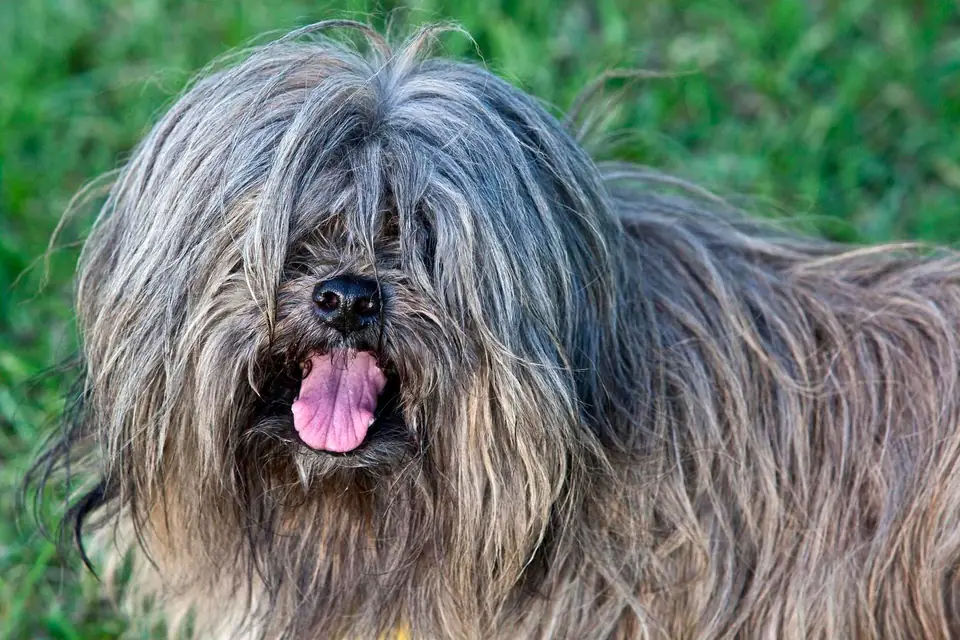
The Lhasa Apso comes from Tibet, where they lived inside monasteries and houses as an indoor sentinel, listening and raising the alarm while larger dogs held the ground outside. They weigh 5.4 to 8.2 kg and stand 25 to 28 cm, with a long straight coat parted along the back and a surprisingly hard, well muscled body underneath it. The temperament matches the old job: devoted and playful with their own people, self possessed, and cool with strangers until they have made up their mind about them.
The coat can be kept long or cut into a puppy trim and neither is maintenance free. A long coat needs brushing right down to the skin, a bath every couple of weeks, thorough rinsing and complete drying, because damp hair mats even when it is clean. Lhasas largely exercise themselves around the house and takes well to agility and scent work. They rate in the middle with children, so supervise and socialise. Most coats are ruined by brushing only the surface while mats form underneath.
What to expect at eight weeks
At eight weeks a Lhasa Apso puppy is sleeping around 18 to 20 hours a day, is not house trained, and cannot hold on for more than an hour or two at a stretch. A small breed puppy at eight weeks is light enough to carry everywhere, which is exactly how you get them socialised before the vaccination course finishes. They will still need four meals a day. Expect moderate energy, in short bursts separated by long naps. Grooming needs are moderate, so build the brushing habit now while the coat is still short and easy. The socialisation window is open and closing: everything they meet calmly now, from vacuum cleaners to men in hats, is easier for the rest of their life.
Health worth knowing about
Conditions this breed is reported to be predisposed to. Predisposed does not mean inevitable, it means ask about it.
- Progressive retinal atrophy (PRA4), detectable by DNA test
- Hereditary eye disease including cataract and glaucoma, screened under the BVA/KC/ISDS Eye Scheme
- Patellar luxation, detected on orthopaedic examination for a skipping gait and confirmed by imaging
- Renal dysplasia, detected by blood and urine testing and abdominal ultrasound, with kidney biopsy for a definitive diagnosis
- Keratoconjunctivitis sicca (dry eye), detected by a Schirmer tear test at eye examination
- Dental and periodontal disease, detected at veterinary dental examination and managed by cleaning under anaesthetic
Your Lhasa Apso puppy's first six months
- Vaccination schedule, dated for your country.
- Worming and parasite schedule.
- Feeding calculator. Set expected adult size to Small for a Lhasa Apso.
- Adult size predictor, to check growth against the 5.4 to 8.2 kg adult range.
- Puppy names and the first week checklist.
Kit sizes: crate 24 inch (24 x 18 x 20 in, 61 x 46 x 51 cm) for an adult of up to 8.2 kg; chew toys made for small breeds. Worked out the same way as the crate size calculator. PetMD bases a crate on the dog's own measurements, not weight or breed alone, so measure once the puppy is home.
Buying guides for this
Other small breeds
More on the Lhasa Apso
Previous: Leonberger · Next: Löwchen
Not veterinary advice. Breed information is general. Your own dog, and your own vet, always win.
Sources
- akc.org for adult weight and height, life expectancy, energy, grooming, shedding and the temperament ratings, coat type and health notes
- fci.be for country of origin
- Health notes from Lhasa Apso breed information at https://www.akc.org/dog-breeds/lhasa-apso/. Discuss any of these with your own vet.
Photo: Sheba_Also 43,000 photos, CC BY-SA 2.0, via Wikimedia Commons, cropped. All photographers are listed on the photo credits page.