Breeds / Large
Large Munsterlander puppies
Affectionate, biddable and quiet in the house, a versatile German gundog that hunts, points, retrieves and tracks and needs work to match.
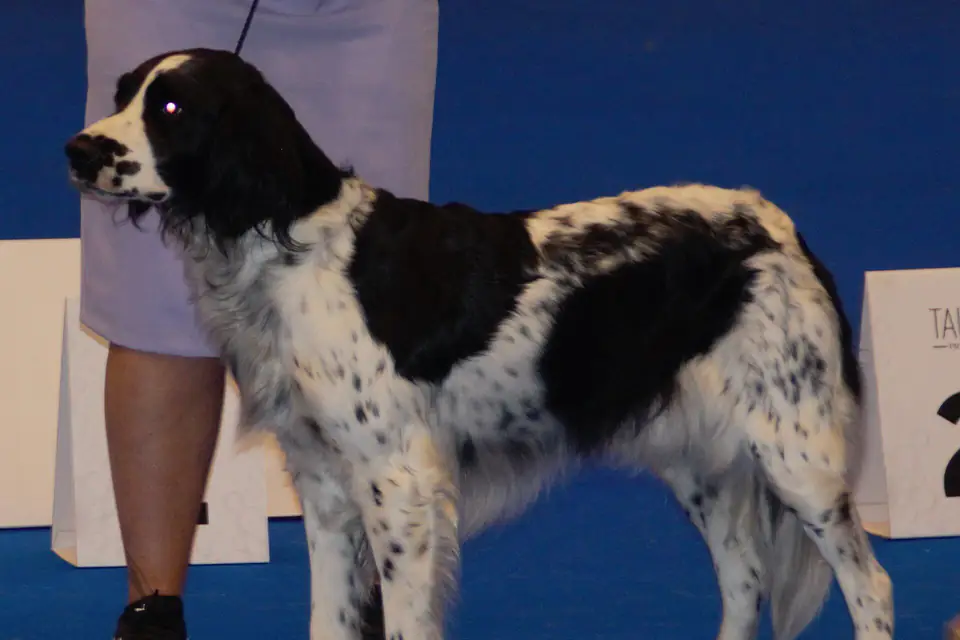
The facts
- Size class Large
- Country of origin Germany
- Adult weight 22.7 to 31.8 kg
- Adult weight in pounds 50 to 70 lb
- Adult height 58 to 67 cm
- Energy level High
- Grooming Low
- Coat type Not published
- Shedding Moderate
- Typical lifespan 12 to 14 years
- Good with children Usually good
- Good with other dogs Fine with supervision
About the Large Munsterlander
The Large Munsterlander is a German gundog that split off from the German Longhaired Pointer when black and white dogs were excluded from that breed's register and enthusiasts carried on with them as their own. They weigh 22.7 to 31.8 kg and stand 58 to 67 cm. This is a genuine all rounder that hunts, points, retrieves and tracks. At home they are affectionate and quiet by gundog standards, and they carry the top trainability rating for good reason.
These dogs need a great deal of work. Without daily hard exercise and something for the nose, a Munsterlander goes self employed, wandering off to hunt on their own account, so recall training and a secure boundary come first. Grooming is occasional brushing, with more attention in late spring and early autumn when they shed. They rate well with children, with supervision and socialisation. A walk round the park is a long way short of what this dog needs, family pet or not.
What to expect at eight weeks
At eight weeks a Large Munsterlander puppy is sleeping around 18 to 20 hours a day, is not house trained, and cannot hold on for more than an hour or two at a stretch. A large breed puppy at eight weeks looks deceptively normal sized and will roughly double every few weeks for a while. Keep exercise short and low impact, the growth plates are wide open. This is a high energy breed. At eight weeks that shows up as intensity rather than stamina, and they will need a job to do long before they need long walks. Grooming is straightforward, but start handling the coat, feet and ears in week one anyway so it is never a fight later. The socialisation window is open and closing: everything they meet calmly now, from vacuum cleaners to men in hats, is easier for the rest of their life.
Health worth knowing about
Conditions this breed is reported to be predisposed to. Predisposed does not mean inevitable, it means ask about it.
- Hip dysplasia, screened by x-ray evaluation of breeding stock
- Inherited eye disease including cataract, screened by an ophthalmologist examination
- Ear infections under the drop ear, found by regular ear checks
Your Large Munsterlander puppy's first six months
- Vaccination schedule, dated for your country.
- Worming and parasite schedule.
- Feeding calculator. Set expected adult size to Large for a Large Munsterlander.
- Adult size predictor, to check growth against the 22.7 to 31.8 kg adult range.
- Puppy names and the first week checklist.
Kit sizes: crate 36 inch (36 x 24 x 26 in, 91 x 61 x 66 cm) for an adult of up to 31.8 kg; chew toys made for large breeds. Worked out the same way as the crate size calculator. PetMD bases a crate on the dog's own measurements, not weight or breed alone, so measure once the puppy is home.
Buying guides for this
Other large breeds

Previous: Lapponian Herder · Next: Leonberger
Not veterinary advice. Breed information is general. Your own dog, and your own vet, always win.
Sources
- akc.org for adult weight and height, life expectancy, energy, grooming, shedding and the temperament ratings, coat type and health notes
- fci.be for country of origin
- Health notes from Large Munsterlander breed information at https://www.akc.org/dog-breeds/large-munsterlander/. Discuss any of these with your own vet.
No published figure for coat type, so nothing is shown rather than a guess.
Photo: Canarian, CC BY-SA 4.0, via Wikimedia Commons, cropped. All photographers are listed on the photo credits page.