Breeds / Large
Flat-Coated Retriever puppies
Happy, self assured and willing to please, the Flat-Coated Retriever keeps a puppyish outlook well into adulthood. They have a shorter life expectancy than the other retrievers, largely because of cancer.

The facts
- Size class Large
- Country of origin Great Britain
- Adult weight 27.2 to 31.8 kg
- Adult weight in pounds 60 to 70 lb
- Adult height 56 to 62 cm
- Energy level Very high
- Grooming Moderate
- Coat type Medium smooth
- Shedding Moderate
- Typical lifespan 8 to 10 years
- Good with children Reliably good
- Good with other dogs Reliably good
About the Flat-Coated Retriever
The Flat-Coated Retriever was developed in Britain as a gamekeeper's dog, retrieving on land and from water before the Labrador and the Golden overtook them in popularity. This is a leaner, longer cast retriever with a flat, moderately feathered coat in black or liver and a distinctively long, clean head. The breed is known for staying young in the head, staying bouncy and enthusiastic well past the age when other retrievers settle, and for being friendly with everyone they meet.
Plan on a great deal of daily exercise, retrieving, swimming and scentwork rather than a slow lap of the block, plus training to give all that enthusiasm a shape. Grooming is a weekly brush and comb and a regular ear check. Flat-Coats are soft and keen to please, so reward based training goes easily. The hard part of this breed is the cancer risk rather than the care, so learn to check for lumps and get any new one seen promptly.
What to expect at eight weeks
At eight weeks a Flat-Coated Retriever puppy is sleeping around 18 to 20 hours a day, is not house trained, and cannot hold on for more than an hour or two at a stretch. A large breed puppy at eight weeks looks deceptively normal sized and will roughly double every few weeks for a while. Keep exercise short and low impact, the growth plates are wide open. This is a very high energy breed. The mistake owners make is trying to tire them out physically. Training, scentwork and puzzles will do more than distance ever will. Grooming needs are moderate, so build the brushing habit now while the coat is still short and easy. The socialisation window is open and closing: everything they meet calmly now, from vacuum cleaners to men in hats, is easier for the rest of their life.
Health worth knowing about
Conditions this breed is reported to be predisposed to. Predisposed does not mean inevitable, it means ask about it.
- Cancer, including histiocytic sarcoma, lymphoma and bone cancer, the main reason for the breed's short life expectancy
- Hip dysplasia, screened by a hip evaluation of breeding stock
- Patellar luxation, graded by a veterinary orthopaedic exam
- Glaucoma and other inherited eye disease, screened under the BVA/KC/ISDS Eye Scheme and by an ophthalmologist evaluation
- Bloat and gastric torsion, a sudden and life threatening stomach emergency
Your Flat-Coated Retriever puppy's first six months
- Vaccination schedule, dated for your country.
- Worming and parasite schedule.
- Feeding calculator. Set expected adult size to Large for a Flat-Coated Retriever.
- Adult size predictor, to check growth against the 27.2 to 31.8 kg adult range.
- Puppy names and the first week checklist.
Kit sizes: crate 36 inch (36 x 24 x 26 in, 91 x 61 x 66 cm) for an adult of up to 31.8 kg; chew toys made for large breeds. Worked out the same way as the crate size calculator. PetMD bases a crate on the dog's own measurements, not weight or breed alone, so measure once the puppy is home.
Buying guides for this
Other large breeds





More on the Flat-Coated Retriever
Previous: Finnish Spitz · Next: French Bulldog
Not veterinary advice. Breed information is general. Your own dog, and your own vet, always win.
Sources
- akc.org for adult weight and height, life expectancy, energy, grooming, shedding and the temperament ratings, coat type and health notes
- fci.be for country of origin
- Health notes from Flat-Coated Retriever breed information at https://www.akc.org/dog-breeds/flat-coated-retriever/. Discuss any of these with your own vet.
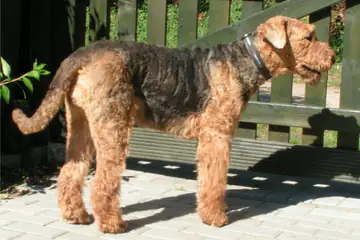
Photo: Fesoj-wr, CC BY-SA 4.0, via Wikimedia Commons, cropped. All photographers are listed on the photo credits page.