Breeds / Large
Dutch Shepherd puppies
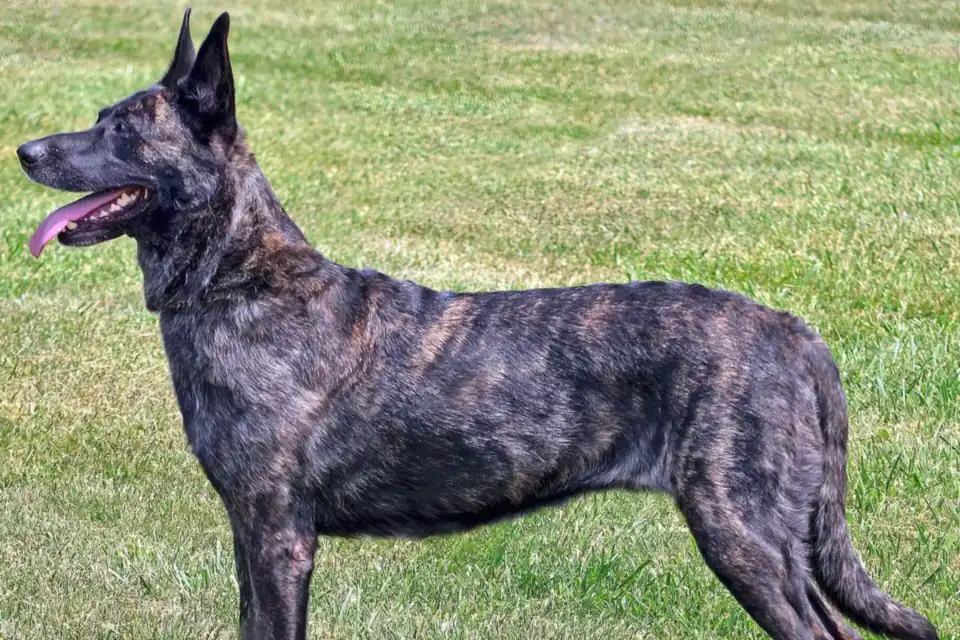
Alert, intelligent and highly trainable, the Dutch Shepherd is a brindle coated working herder that needs a job and a handler to do it with.
The facts
- Size class Large
- Country of origin Netherlands
- Adult weight 19.1 to 34 kg
- Adult weight in pounds 42 to 75 lb
- Adult height 55 to 62 cm
- Energy level Very high
- Grooming Moderate
- Coat type Short double
- Shedding Moderate
- Typical lifespan 11 to 14 years
- Good with children Fine with supervision
- Good with other dogs Fine with supervision
About the Dutch Shepherd
The Dutch Shepherd was a general purpose farm dog in the Netherlands, herding stock, pulling carts and guarding the holding, and they survive today mainly through police, military and dog sport work. This is an athletic herder distinguished by their brindle coat, which comes in short, long and rough haired varieties. Dutchies are quick, biddable and intensely focused on their handler. They are not noisy dogs, but they are demanding ones, and they want a partner rather than an owner.
A Dutch Shepherd needs mental work as much as exercise. Plan on tracking, obedience, agility or club work most days, or the dog will invent a job of their own. The short coat needs occasional brushing and daily attention when it drops. Rated three out of five with children, a Dutch Shepherd suits an experienced, active household with older kids, always supervised and socialised hard from puppyhood. Choose one for more than their looks, and do not plan on leaving them alone at home.
What to expect at eight weeks
At eight weeks a Dutch Shepherd puppy is sleeping around 18 to 20 hours a day, is not house trained, and cannot hold on for more than an hour or two at a stretch. A large breed puppy at eight weeks looks deceptively normal sized and will roughly double every few weeks for a while. Keep exercise short and low impact, the growth plates are wide open. This is a very high energy breed. The mistake owners make is trying to tire them out physically. Training, scentwork and puzzles will do more than distance ever will. Grooming needs are moderate, so build the brushing habit now while the coat is still short and easy. The socialisation window is open and closing: everything they meet calmly now, from vacuum cleaners to men in hats, is easier for the rest of their life.
Health worth knowing about
Conditions this breed is reported to be predisposed to. Predisposed does not mean inevitable, it means ask about it.
- Hip dysplasia, screened by x-ray evaluation of breeding stock in all coat types
- Goniodysplasia, a drainage angle defect linked to glaucoma, screened by gonioscopy in rough haired dogs
- Thyroid disease, found on a thyroid blood panel and recommended for long haired lines
- Inflammatory myopathy, a muscle disorder diagnosed by veterinary investigation
Your Dutch Shepherd puppy's first six months
- Vaccination schedule, dated for your country.
- Worming and parasite schedule.
- Feeding calculator. Set expected adult size to Large for a Dutch Shepherd.
- Adult size predictor, to check growth against the 19.1 to 34 kg adult range.
- Puppy names and the first week checklist.
Kit sizes: crate 42 inch (42 x 28 x 30 in, 107 x 71 x 76 cm) for an adult of up to 34 kg; chew toys made for large breeds. Worked out the same way as the crate size calculator. PetMD bases a crate on the dog's own measurements, not weight or breed alone, so measure once the puppy is home.
Buying guides for this
Other large breeds



More on the Dutch Shepherd
Previous: Drever · Next: English Cocker Spaniel
Not veterinary advice. Breed information is general. Your own dog, and your own vet, always win.
Sources
- akc.org for adult weight and height, life expectancy, energy, grooming, shedding and the temperament ratings, coat type and health notes
- fci.be for country of origin
- Health notes from Dutch Shepherd breed information at https://www.akc.org/dog-breeds/dutch-shepherd/. Discuss any of these with your own vet.
Photo: CaroleField, CC BY-SA 4.0, via Wikimedia Commons, cropped. All photographers are listed on the photo credits page.