Breeds / Large
Doberman Pinscher puppies
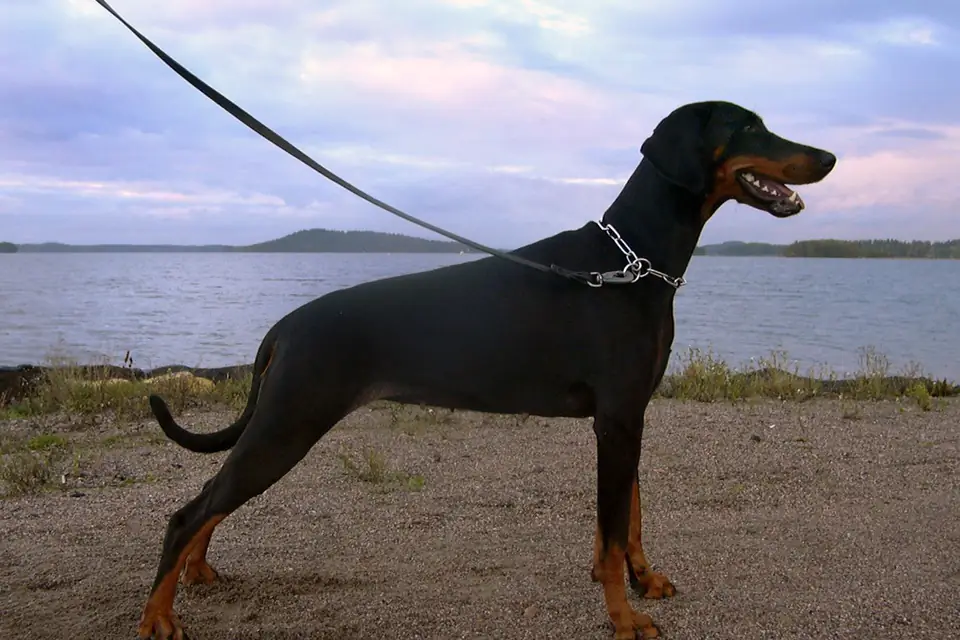
Alert, fearless and loyal, the Doberman Pinscher is a keenly intelligent protection dog that can also be a loving and affectionate pet.
The facts
- Size class Large
- Country of origin Germany
- Adult weight 27.2 to 45.4 kg
- Adult weight in pounds 60 to 100 lb
- Adult height 61 to 71 cm
- Energy level Very high
- Grooming Low
- Coat type Short smooth
- Shedding Heavy, brush often
- Typical lifespan 10 to 12 years
- Good with children Reliably good
- Good with other dogs Fine with supervision
About the Doberman Pinscher
The Doberman Pinscher was put together in Germany by a tax collector who wanted a protection dog to walk his rounds with him, built from several working breeds into something lean, square and deep chested with a short smooth coat and a long clean head. Dobermans are alert and fearless without being frantic. They bond hard to one household, follow their people from room to room rather than settling alone, and they think faster than most owners expect.
Dobermans have very high energy and need long daily walks or runs, a fenced space to sprint in, and a job to think about, whether that is obedience, tracking or agility. The coat is easy, a rubber mitt or short bristled brush every day keeps it clean. Training is the real commitment, because a Doberman learns bad habits as fast as good ones. Rated five out of five with children, and still a dog to supervise and socialise widely.
What to expect at eight weeks
At eight weeks a Doberman Pinscher puppy is sleeping around 18 to 20 hours a day, is not house trained, and cannot hold on for more than an hour or two at a stretch. A large breed puppy at eight weeks looks deceptively normal sized and will roughly double every few weeks for a while. Keep exercise short and low impact, the growth plates are wide open. This is a very high energy breed. The mistake owners make is trying to tire them out physically. Training, scentwork and puzzles will do more than distance ever will. Grooming is straightforward, but start handling the coat, feet and ears in week one anyway so it is never a fight later. The socialisation window is open and closing: everything they meet calmly now, from vacuum cleaners to men in hats, is easier for the rest of their life.
Health worth knowing about
Conditions this breed is reported to be predisposed to. Predisposed does not mean inevitable, it means ask about it.
- Von Willebrand's disease, an inherited bleeding disorder
- Hip dysplasia, which breeding stock should be hip scored by x-ray before mating
- Eye disease, screened by an annual ophthalmologist eye examination
- Bloat, a potentially fatal digestive disorder of the stomach
Your Doberman Pinscher puppy's first six months
- Vaccination schedule, dated for your country.
- Worming and parasite schedule.
- Feeding calculator. Set expected adult size to Large for a Doberman Pinscher.
- Adult size predictor, to check growth against the 27.2 to 45.4 kg adult range.
- Puppy names and the first week checklist.
Kit sizes: crate 48 inch (48 x 30 x 32 in, 122 x 76 x 81 cm) for an adult of up to 45.4 kg; chew toys made for large breeds. Worked out the same way as the crate size calculator. PetMD bases a crate on the dog's own measurements, not weight or breed alone, so measure once the puppy is home.
Buying guides for this
Other large breeds





More on the Doberman Pinscher
Previous: Deutscher Wachtelhund · Next: Dogo Argentino
Not veterinary advice. Breed information is general. Your own dog, and your own vet, always win.
Sources
- akc.org for adult weight and height, life expectancy, energy, grooming, shedding and the temperament ratings, coat type and health notes
- fci.be for country of origin
- Health notes from Doberman Pinscher breed information at https://www.akc.org/dog-breeds/doberman-pinscher/. Discuss any of these with your own vet.
Photo: Stonda, CC BY 2.5, via Wikimedia Commons, cropped. All photographers are listed on the photo credits page.