Breeds / Large
Bull Terrier puppies
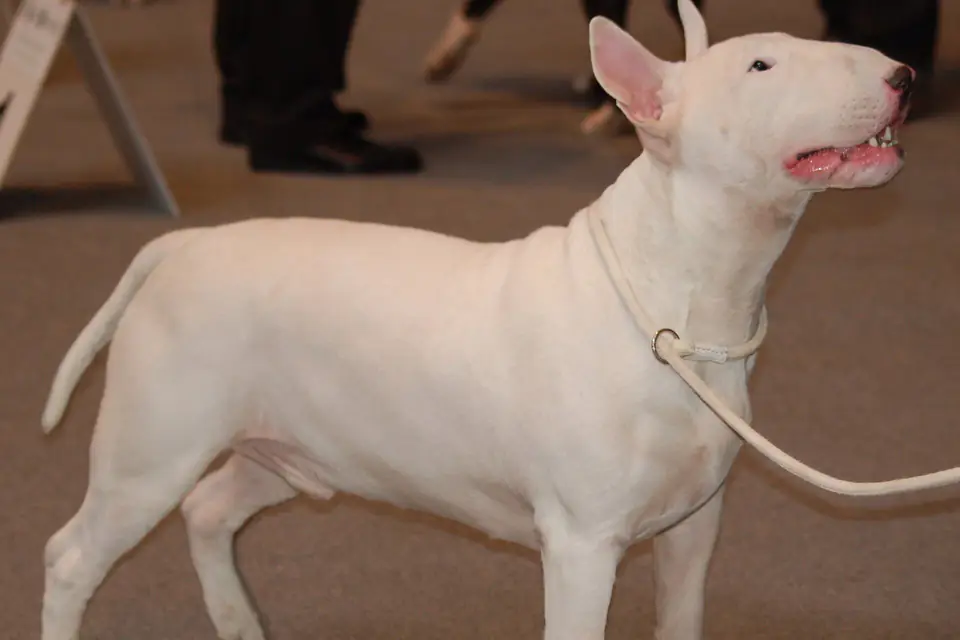
The Bull Terrier is a big boned terrier with a distinctive egg shaped head, playful and mischievous and closely attached to their people. They are strong for their size and need early training and steady supervision around other dogs.
The facts
- Size class Large
- Country of origin Great Britain
- Adult weight 22.7 to 31.8 kg
- Adult weight in pounds 50 to 70 lb
- Adult height 53 to 56 cm
- Energy level High
- Grooming Moderate
- Coat type Short smooth
- Shedding Moderate
- Typical lifespan 12 to 13 years
- Good with children Fine with supervision
- Good with other dogs Not recommended
About the Bull Terrier
The Bull Terrier was made in nineteenth century England by crossing bulldogs with terriers, first for fighting and then bred by a Birmingham dealer into a white gentleman's companion, with the egg shaped head and small triangular eyes fixed later. This is a thickset, heavily boned dog with a short harsh coat and startling physical strength for their size. The character is comic and stubborn: playful well into adulthood, clownish, very attached to their people, and often difficult with other dogs.
Daily walks and moderate but genuine exercise suit them, along with sports that use their head, since a bored Bull Terrier turns destructive and can become obsessive about spinning or tail chasing. Grooming is a weekly rub over with a soft brush or hound glove. Training needs to start early and stay consistent, because a fully grown one cannot be physically overruled. Keep a close eye on them around other dogs, and do not count on things sorting themselves out.
What to expect at eight weeks
At eight weeks a Bull Terrier puppy is sleeping around 18 to 20 hours a day, is not house trained, and cannot hold on for more than an hour or two at a stretch. A large breed puppy at eight weeks looks deceptively normal sized and will roughly double every few weeks for a while. Keep exercise short and low impact, the growth plates are wide open. This is a high energy breed. At eight weeks that shows up as intensity rather than stamina, and they will need a job to do long before they need long walks. Grooming needs are moderate, so build the brushing habit now while the coat is still short and easy. The socialisation window is open and closing: everything they meet calmly now, from vacuum cleaners to men in hats, is easier for the rest of their life.
Health worth knowing about
Conditions this breed is reported to be predisposed to. Predisposed does not mean inevitable, it means ask about it.
- Congenital deafness, most common in white dogs, detected by BAER testing of puppies before they leave the breeder
- Hereditary nephritis and other kidney disease, screened by a urine protein to creatinine ratio test
- Cardiac disease including mitral valve dysplasia, screened by a cardiac exam
- Patellar luxation, a slipping kneecap, found on a patella evaluation
- Skin allergies and sunburn on thin white coats, managed with veterinary advice and shade
Your Bull Terrier puppy's first six months
- Vaccination schedule, dated for your country.
- Worming and parasite schedule.
- Feeding calculator. Set expected adult size to Large for a Bull Terrier.
- Adult size predictor, to check growth against the 22.7 to 31.8 kg adult range.
- Puppy names and the first week checklist.
Kit sizes: crate 36 inch (36 x 24 x 26 in, 91 x 61 x 66 cm) for an adult of up to 31.8 kg; chew toys made for large breeds. Worked out the same way as the crate size calculator. PetMD bases a crate on the dog's own measurements, not weight or breed alone, so measure once the puppy is home.
Buying guides for this
Other large breeds




Previous: Brussels Griffon · Next: Bulldog
Not veterinary advice. Breed information is general. Your own dog, and your own vet, always win.
Sources
- akc.org for adult weight and height, life expectancy, energy, grooming, shedding and the temperament ratings, coat type and health notes
- fci.be for country of origin
- Health notes from Bull Terrier breed information at https://www.akc.org/dog-breeds/bull-terrier/. Discuss any of these with your own vet.
Photo: Lilly M, CC BY-SA 2.5, via Wikimedia Commons, cropped. All photographers are listed on the photo credits page.