Breeds / Large
Bloodhound puppies
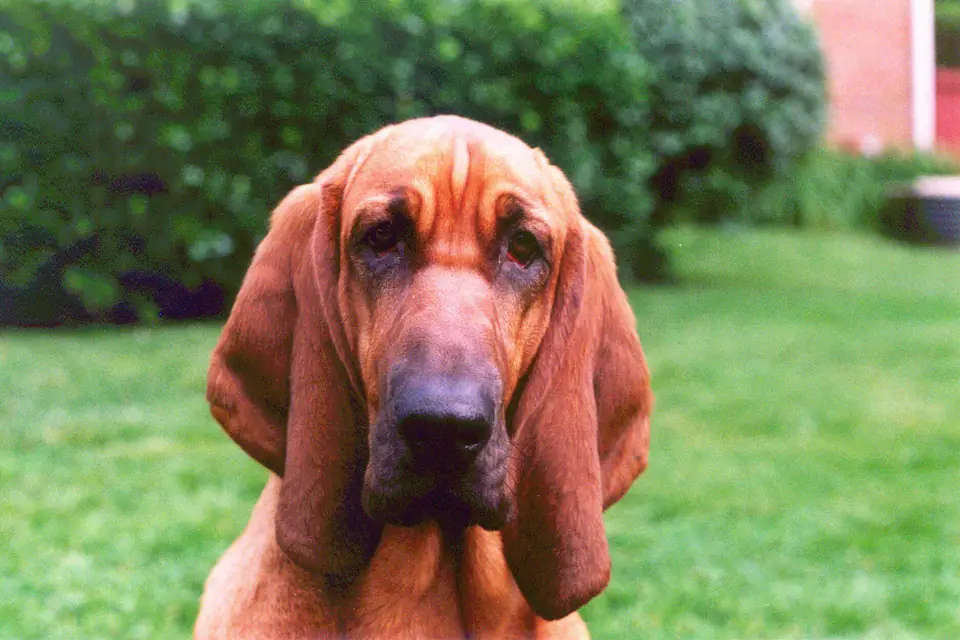
The Bloodhound is a large trailing hound with loose skin, long ears and the most accurate nose of any breed. They are friendly and even tempered but single minded on a scent, and they swallow objects they should not.
The facts
- Size class Large
- Country of origin Belgium
- Adult weight 36.3 to 49.9 kg
- Adult weight in pounds 80 to 110 lb
- Adult height 58 to 69 cm
- Energy level Moderate
- Grooming Moderate
- Coat type Short smooth
- Shedding Moderate
- Typical lifespan 10 to 12 years
- Good with children Fine with supervision
- Good with other dogs Fine with supervision
About the Bloodhound
The Bloodhound was refined in Belgium and later Britain as a trailing hound, and their work is still accepted as evidence in some courts. This is a large, heavy dog of 58 to 69cm and 36.3 to 49.9kg, with loose wrinkled skin, extraordinarily long ears and a slow, ground covering stride. Their temperament is gentle and tolerant with people, unhurried indoors, and utterly single minded once a trail begins. They rate mid scale with children and other pets, so supervise and socialise early.
Films show this hound dozing on a porch. In reality they need long daily walks on the lead, since they will ignore commands once they have a scent, plus a securely fenced garden, because they dig and escape. Coat care is a weekly hound glove and regular baths for the odour, but the ears need daily checking and the facial folds need wiping and drying. Bloodhounds swallow things they should not, which lands many of them on an operating table, so manage what is within reach.
What to expect at eight weeks
At eight weeks a Bloodhound puppy is sleeping around 18 to 20 hours a day, is not house trained, and cannot hold on for more than an hour or two at a stretch. A large breed puppy at eight weeks looks deceptively normal sized and will roughly double every few weeks for a while. Keep exercise short and low impact, the growth plates are wide open. Expect moderate energy, in short bursts separated by long naps. Grooming needs are moderate, so build the brushing habit now while the coat is still short and easy. The socialisation window is open and closing: everything they meet calmly now, from vacuum cleaners to men in hats, is easier for the rest of their life.
Health worth knowing about
Conditions this breed is reported to be predisposed to. Predisposed does not mean inevitable, it means ask about it.
- Gastric dilatation volvulus, a surgical emergency, risk rises with deep chests, so owners should learn the signs
- Hip and elbow dysplasia, screened by hip and elbow evaluation of breeding stock
- Cardiac disease, screened by a cardiac exam on breeding stock
- Ear infections, because the low hanging ears trap moisture, so ears need daily checking
- Skin fold irritation and infection, prevented by wiping and drying the facial wrinkles
- Foreign body obstruction from swallowing objects, an emergency diagnosed by x-ray or ultrasound
Your Bloodhound puppy's first six months
- Vaccination schedule, dated for your country.
- Worming and parasite schedule.
- Feeding calculator. Set expected adult size to Large for a Bloodhound.
- Adult size predictor, to check growth against the 36.3 to 49.9 kg adult range.
- Puppy names and the first week checklist.
Kit sizes: crate 48 inch (48 x 30 x 32 in, 122 x 76 x 81 cm) for an adult of up to 49.9 kg; chew toys made for large breeds. Worked out the same way as the crate size calculator. PetMD bases a crate on the dog's own measurements, not weight or breed alone, so measure once the puppy is home.
Buying guides for this
Other large breeds
Previous: Black Russian Terrier · Next: Blue Lacy
Not veterinary advice. Breed information is general. Your own dog, and your own vet, always win.
Sources
- akc.org for adult weight and height, life expectancy, energy, grooming, shedding and the temperament ratings, coat type and health notes
- fci.be for country of origin
- Health notes from Bloodhound breed information at https://www.akc.org/dog-breeds/bloodhound/. Discuss any of these with your own vet.
Photo: Asilverstein, CC BY-SA 3.0, via Wikimedia Commons, cropped. All photographers are listed on the photo credits page.